Crawl Space & Attic Pipe Protection Near Me
Starting price: Call for pricing
Plumbing Pros protects the pipes you cannot see — sealing your crawl space and attic so cold air never reaches hidden supply lines. A plumber closes vents, seals drafts and gaps, insulates every exposed run, and adds heat cable where the cold hits hardest, so your plumbing rides out winter unnoticed.
What crawl space and attic pipe protection is
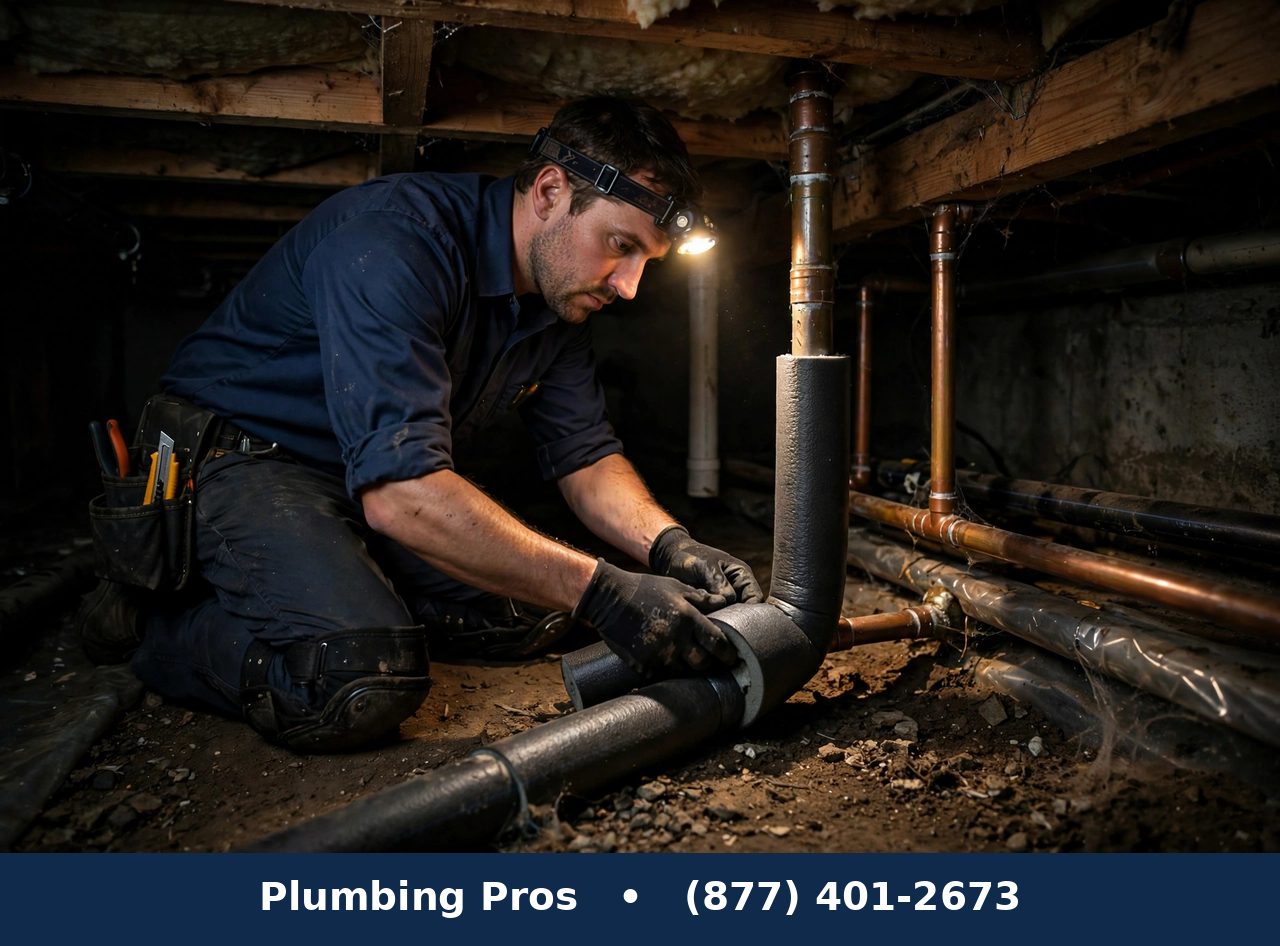
Crawl space and attic pipe protection is a plumbing service that seals and insulates your home's hidden pipe runs. A plumber closes foundation vents, repairs vapor barriers, seals gaps around pipes and wires, wraps exposed pipe in insulation, and adds heat cable to the coldest runs. It keeps supply lines warm through winter in the parts of the house you never visit.
That work matters because hidden runs sit at nearly outdoor temperature. Pipes inside your walls share the warmth of the rooms around them, but runs across a vented crawl space or through a cold attic do not. When a cold snap arrives, those exposed lines are the first to ice up, and the first to split when the ice expands.
This service treats the space as part of the job. Insulating a pipe helps, but cold air streaming through an open vent or rim-joist gap forces the insulation to work much harder. So the job starts with the space: close the drafts, fix the moisture barrier, then shield each run. It does not replace your home's main insulation, and it does not heat the crawl space. It simply stops the cold from reaching the plumbing.
When your home needs it
If your home has a crawl space or attic and your area sees freezing weather, your pipes are worth a look. A short visit now beats a burst pipe in January. Watch for these signs:
- Floors that feel cold over the crawl space in winter
- Drafts or daylight showing through foundation vents
- Pipes in the crawl space or attic that feel icy to the touch
- Water pressure that drops on the coldest mornings
- A past freeze-up, even one you thawed yourself
- Pipe runs visible near the attic roof or eaves
Older homes run into this most: vents were often left open year-round, and insulation settles over time. But newer builds get caught too, since one open vent or one bare run near an exterior wall is enough. If any of this sounds familiar, have a plumber look at the space before the cold does.
How the protection process works
It starts with a visit. The plumber walks the crawl space and attic, tracing every supply line to find where cold air reaches it. You hear what was found in plain language, and what should be done about it.
Then the space gets sealed. Foundation vents get closable covers that shut for winter and open again when the weather warms. Gaps around pipes, wires, and ducts get closed with caulk or expanding foam. Even a pencil-wide gap can keep a steady stream of cold air blowing onto a pipe. Torn sections of the vapor barrier get repaired or replaced, so ground moisture stops soaking the insulation and framing.
Next, each exposed run gets wrapped. Straight pipes get pre-slit foam sleeves sized to the pipe's diameter. The fit matters more than the brand, because a loose sleeve traps cold air against the pipe. Elbows, valves, and joints get fiberglass wrap that hugs the shape, held with wire ties or cold-rated tape. Every joint and corner gets sealed so no bare metal shows through.
The coldest runs get heat cable. Self-regulating heat cable wraps around the pipe under the insulation and warms up as the temperature falls, then backs off as it rises. It goes on the runs nearest exterior walls and foundation edges, where cold pressure is highest, and gets tested before the insulation goes back over it.
Finally, the plumber walks the work once more. Every cover, seam, and cable gets checked, and the attic is looked over one last time for drafts near the roofline. You get a summary of what was sealed and wrapped, and what to look at each fall.
What affects the cost
No two homes need the same work. The biggest factor is how much pipe sits exposed: a short run near one wall is quick, while a crawl space full of branching lines takes more material and time. Access matters too, since a roomy crawl space with a clear hatch is faster to work in than a low, tight one.
Condition counts as well. Vents that only need covers and a barrier with small tears are straightforward; missing vents, long rim-joist gaps, or a badly torn barrier add work. Heat cable changes the job too, since the coldest runs take extra steps. Timing plays a role as well: a planned visit before winter is simpler than work done during a freeze, when access is harder and the risk is live.
The only way to get an exact number for your home is a quote for your home. Call the number on this page, describe your crawl space or attic, and you will hear what the work would involve.
How we serve your area
Plumbing Pros brings this service to homes wherever hidden pipes face winter cold. That means ranch houses with open vented crawl spaces, two-story homes with supply lines in the attic, and older houses where vents and barriers have worn down. Rental properties and vacation homes get it too, since an unheated crawl space does not care whether anyone is home.
Wherever the house sits, hidden pipes freeze the same way, and this service travels to you. The visit follows the same order everywhere: look at the space, seal the drafts, wrap the runs, and check the work. When the first cold snap of the season arrives, the pipes you never see are the ones you never have to think about.
Features
- Foam sleeves sized and fitted to each exposed pipe run
- Fiberglass wrap and taped joints for elbows, valves, and fittings
- Self-regulating heat cable on runs facing the harshest cold
- Closable covers fitted to foundation and crawl space vents
- Air leaks sealed at every pipe, wire, and duct penetration
- Vapor barrier repair to block ground moisture from below
- Final walk-through checking every seam, cover, and cable
Benefits
- Pipes ride out cold snaps instead of freezing and splitting
- Lower risk of burst pipes and the flooding they cause
- Warmer floors above the crawl space on winter mornings
- Hot water lines lose less heat on the way to the tap
- Drier framing and insulation that hold up longer
- One visit protects both the space and the pipes inside it
Frequently asked questions
Does pipe insulation really stop pipes from freezing?
It buys a big margin of safety. Insulation slows heat loss so the water in the line stays above freezing far longer, and paired with sealed vents and drafts it handles most cold snaps on its own. For the harshest stretches, heat cable adds active warmth under the insulation.
How much does crawl space pipe protection cost?
It depends on how much pipe is exposed, how easy the space is to reach, the state of your vents and vapor barrier, and whether heat cable is needed. Call the number on this page, describe your setup, and you will get an exact quote for your home.
Should crawl space vents stay open in winter?
Open vents let freezing air pour straight onto the pipes, so most homes do better with closable vent covers shut for the winter and reopened in spring. Some airflow still matters for moisture, which is why a repaired vapor barrier is part of the job.
What is heat cable, and does my crawl space need it?
Heat cable is a flexible cable that wraps around the pipe and gives off warmth, ramping up as the temperature falls. It is recommended for runs near exterior walls and foundation edges, where insulation alone may not hold back a hard freeze.
Can pipes in the attic really freeze?
Yes. Attics sit close to outdoor temperature on cold nights, and pipe runs near the roof or eaves can freeze fast. Sealing attic drafts and wrapping those runs is the same protection, applied to the top of the house instead of the bottom.