
Faucet Repair Near Me
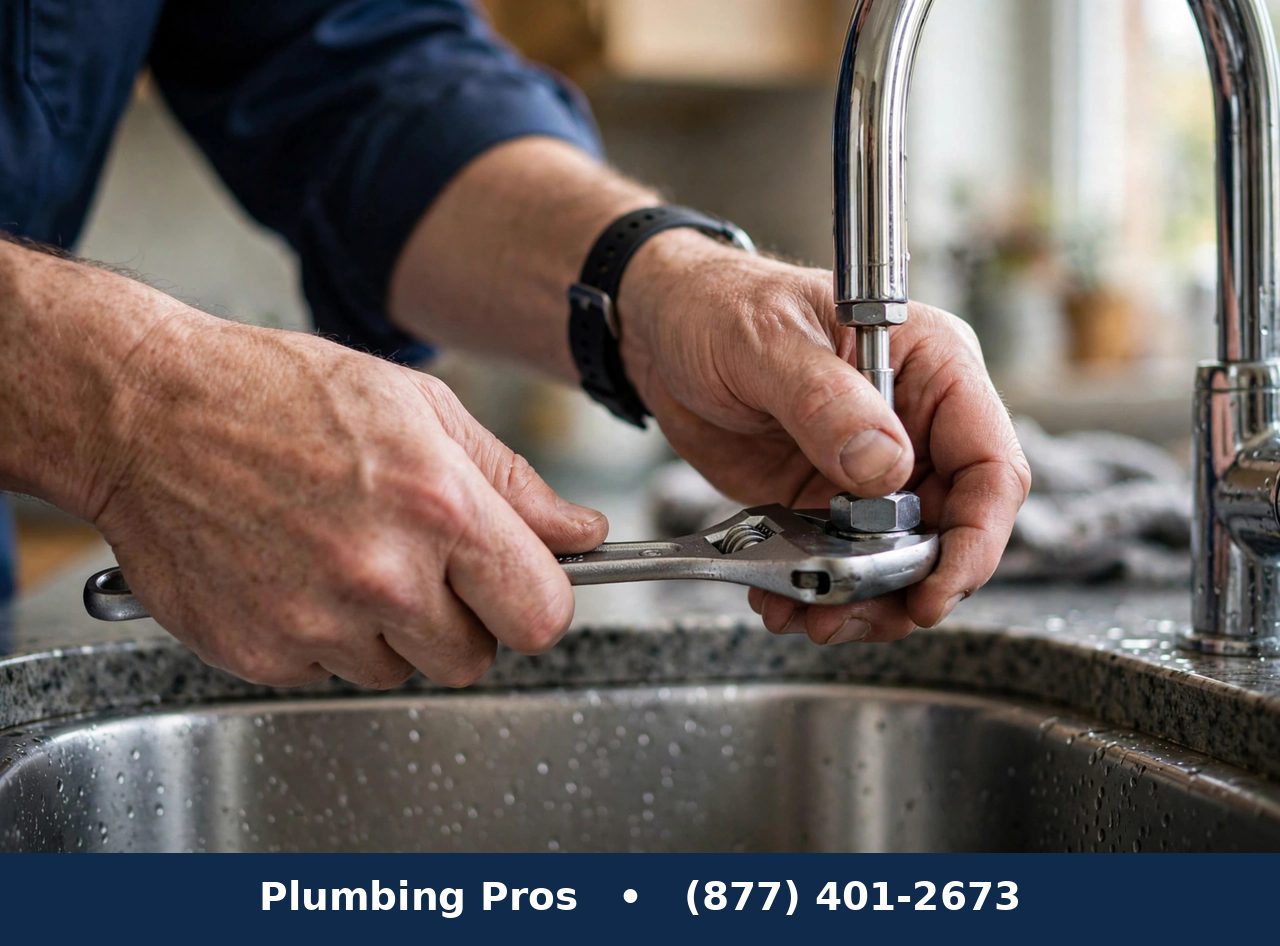
Starting price: Call for pricing
A dripping faucet wastes water and patience in equal measure. Plumbing Pros repairs kitchen, bathroom, laundry, and outdoor faucets — tracking down worn washers, cartridges, and seals so the drip stops and the handle turns like it should.
What faucet repair covers
Faucet repair is the diagnosis and restoration of a failing faucet: finding the worn washer, O-ring, cartridge, or seal inside, replacing it with an exact match, and getting the fixture back to a tight, quiet, smooth-running state. It covers kitchen, bathroom, laundry, and outdoor faucets — spout drips, base leaks, weak or spraying streams, and handles that stick or wobble. A full fixture replacement is only on the table when the faucet itself is beyond saving.
A faucet is a small machine, and knowing the model helps. Compression faucets use separate hot and cold handles that press a rubber washer against a metal valve seat — the washers harden and the seats pit over time. Cartridge faucets use a self-contained mixing cartridge whose internal seals wear until the spout drips or the handle stiffens. Ball faucets mix hot and cold with a slotted ball on springs and seats that wear unevenly. Ceramic-disc faucets slide two polished discs together and last the longest, though grit in the water can score them. Each type fails differently, and each needs a different repair.
What faucet repair does not cover: it is about the fixture, not the system behind it. Supply-line repipes, drain work, water heater service, and whole-house pressure problems are separate jobs.
When you need faucet repair
- A steady drip from the spout that continues after the handle is fully closed
- Water pooling or seeping around the base of the faucet where it meets the sink
- Handles that stick, grind, wobble, or need an extra-hard twist to close
- A stream that sprays sideways, sputters, or runs weak on hot or cold
- Rust, green corrosion, or chalky mineral crust building up around the spout
- Squealing, rattling, or banging sounds when the faucet runs
- Water use climbing with no change in household habits — a drip you rarely see still runs
How a faucet repair visit works
- You describe the problem: where the water appears, when it started, and what the fixture looks like. A photo of the faucet helps with part matching before the visit.
- The shutoff valves under the sink are located and tested so the water can be stopped cleanly. If the local shutoffs are seized, the main shutoff is used instead.
- The faucet is identified — type, configuration, and visible markings — because the repair plan depends on which of the four families it belongs to.
- The fixture is taken apart carefully: handle off, packing nut or retainer out, stem or cartridge lifted free. The failed part is found by inspection, not guesswork — cracks, flattening, mineral buildup, and corrosion all leave evidence.
- The worn part is replaced with an exact match. Washers, O-rings, cartridges, and seats are sized to the fixture, because a close-enough part is what causes repeat drips.
- The valve seat gets checked too. A pitted or corroded seat is cleaned or replaced, since new soft parts cannot seal on a damaged surface.
- Everything is reassembled, the water is turned back on slowly, and the faucet is tested on hot and cold, then fully closed and watched for any lingering drip.
- The area is wiped down and you get a plain-language rundown of what failed and what was done.
What affects the cost of faucet repair
The faucet type matters most. A compression faucet needing a washer and a seat touch-up is a simpler job than a ceramic-disc unit with a scored disc assembly — the parts differ, and the labor to reach them differs. Age plays a role too: fixtures from discontinued lines can take real detective work to match parts for, and sometimes the honest answer is that a matching part no longer exists.
Access changes the picture. A bathroom sink with clear space underneath is quick to work on; a deep farmhouse sink, a wall-mounted faucet, or a fixture crammed behind a disposal takes more time. The number of fixtures in the visit matters as well — fixing two or three tired faucets in one trip is more efficient per faucet than one trip per faucet.
Severity is the last lever. A drip from a tired washer is one thing; a faucet with a corroded valve body, split supply connection, or multiple failed parts at once is another.
How Plumbing Pros serves your area
Plumbing Pros handles faucet repair for homes and businesses of every shape: single-family homes, condos, rentals, offices, restaurants, and small storefronts. The visit covers the full range — kitchen faucets, bathroom sinks, tub and shower trims, laundry sinks, and outdoor hose bibs.
Visits come stocked with the common wear parts: washer assortments, O-ring kits, and the cartridge types that fit the most common fixtures in the area.
And when a faucet is genuinely beyond repair — cracked body, corroded beyond safe reassembly, parts no longer manufactured — the options are laid out before anything is replaced. Repair is the default whenever the fixture earns it; replacement only happens with your say-so.
Features
- Pinpoint diagnosis of the exact failed part before any work begins
- Repair of compression, cartridge, ball, and ceramic-disc faucets
- Exact-match washers, O-rings, cartridges, and seal replacements
- Valve seat cleaning or replacement for stubborn spout drips
- Base and handle leak repairs, including stiff or wobbly handles
- Honest repair-versus-replace advice when a fixture is beyond saving
Benefits
- The drip stops, so the water waste stops with it
- Handles turn smoothly without forcing, jiggling, or grinding
- Steady, even stream with no spraying, sputtering, or weak spots
- Repair comes first when the fixture is worth saving — no surprise replacement
- Most faucet problems are resolved in a single visit
- Clear explanation of what failed and exactly what was fixed
Frequently asked questions
Why does my faucet keep dripping after I turn it off?
A seal inside the faucet is no longer holding back supply pressure. In most cases the failed part is a worn washer, O-ring, or cartridge — and cranking the handle tighter usually just damages the part further instead of stopping the drip.
Can a dripping faucet really affect my water bill?
It can. A faucet that drips without stopping wastes a surprising amount of water over a month — often enough to show up on the bill. Fixing the drip early also protects the sink finish from mineral staining.
Should I repair my faucet or replace it?
Repair is the right call when the faucet body is sound and the failed part can be matched. Replacement makes more sense when the body is cracked, the finish is flaking, or the model is so old that parts are no longer made.
How long does a typical faucet repair take?
Once the faucet is open and the worn part is identified, most repairs are finished well within the hour. The part-matching step is what takes the most care, since an exact fit is what makes the repair last.
What makes a faucet start dripping again after it was repaired?
Usually the valve seat — the surface the seal presses against. If the seat is pitted or corroded, even a brand-new washer cannot seal on it. That is why a proper repair includes checking the seat, not just swapping the soft parts.
My handle is stiff and hard to turn — can that be fixed?
Yes, in most cases. Stiffness usually comes from mineral buildup on the cartridge or dried-out O-rings. Cleaning the internals, fitting fresh seals, and lubricating the moving parts brings back smooth motion.
How much does faucet repair cost?
Yes. The price depends on the faucet type, the condition of the internals, how accessible the fixture is, and whether one or several faucets are fixed in the visit. Reach out for an exact quote once the problem is seen.