
Frozen Pipe Thawing & Repair Near Me
Starting price: Call for pricing
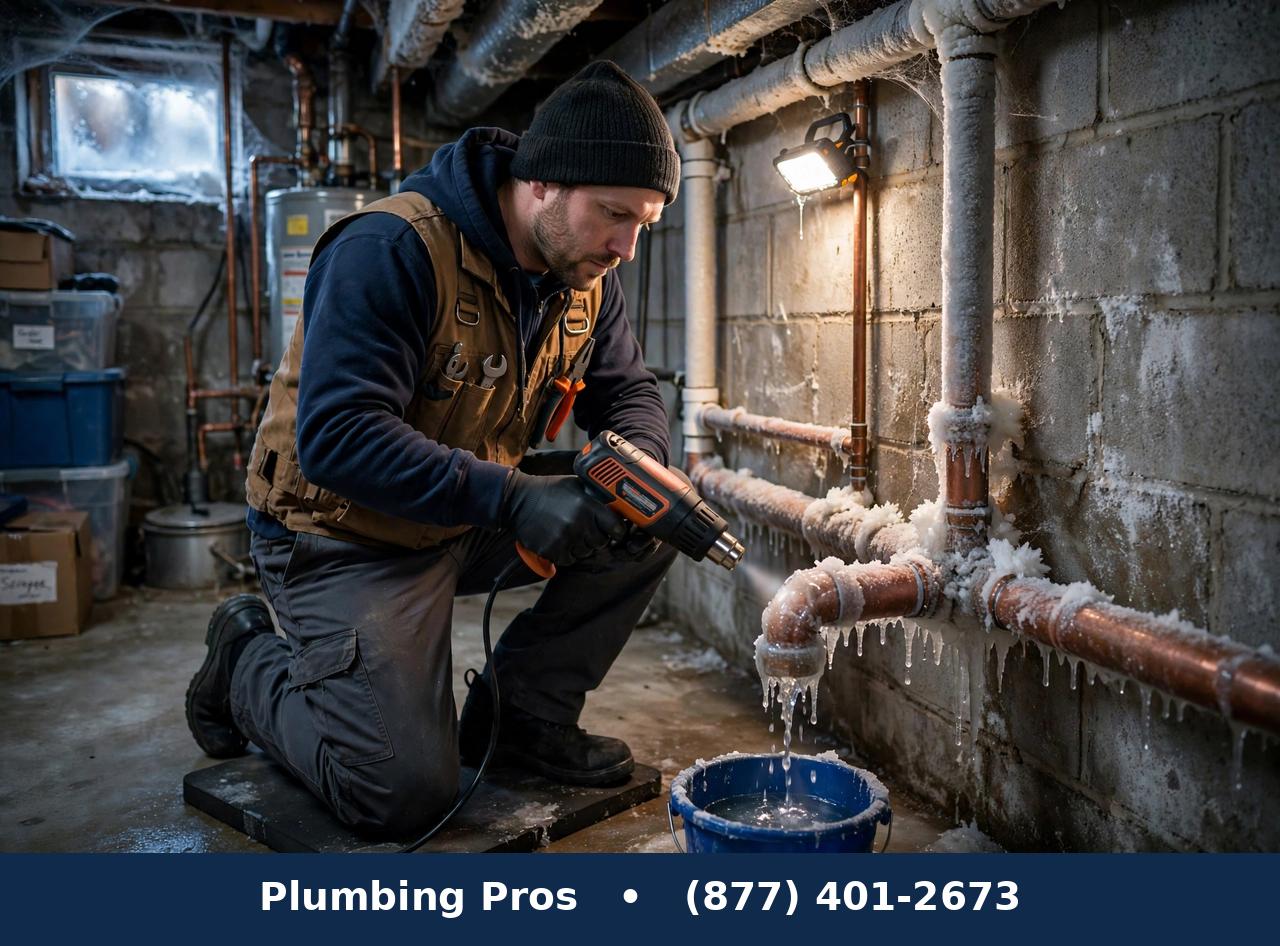
A faucet that runs dry on a freezing morning usually means a section of water pipe has turned to ice. Plumbing Pros thaws frozen pipes with controlled, flame-free heat, finds any split the ice left behind, and repairs it on the spot. The line is then insulated or fitted with heat cable so the next cold snap does not shut it down again.
What frozen pipe thawing and repair is
Frozen pipe thawing is the controlled reheating of an iced water line so flow returns without splitting the pipe. Heat goes on gradually, starting at the open faucet and moving back toward the ice, which lets meltwater escape instead of building pressure. Repair is the next step when the ice already did damage: the split section is cut out, new pipe is spliced in, and the run is protected so the same spot does not freeze again.
The service covers indoor water supply lines — copper, PEX, CPVC, and older metal pipe — running through exterior walls, crawl spaces, basements, garages, and attics. It covers hose bibs and the pipe where your water service enters the house, since both sit in cold spots. What it does not cover is the mess a burst leaves behind: drying drywall, pulling up flooring, or treating mold is restoration work, a different trade with different tools.
When you need it
The classic sign is one faucet that gives a thin trickle or nothing at all while the rest of the house runs fine. That pattern points to a single iced section rather than a supply problem. Other signs are worth watching for, too:
- No hot water from one tap while cold water works — the hot line can freeze on its own.
- Frost or a white glaze on an exposed pipe in the basement, garage, or crawl space.
- Gurgling or clanking when you turn on a faucet, as water pushes against ice.
- A toilet tank that will not refill after a flush.
- Water stains on a ceiling or wall, or the sound of running water where it should not be — that means a pipe already burst.
If the weather has stayed below freezing for a day or more and a faucet goes quiet, treat it as a frozen line until proven otherwise.
How the process works
It starts with a call. You describe what is happening — which faucet is affected, when it stopped, whether you can reach the pipe. The plumber talks you through the first safe steps: leave the affected faucet open so meltwater has somewhere to go, and know where your main water shutoff is in case a split opens during the thaw.
On site, the frozen section is located by touch and by following the dead faucet's line through the coldest spaces. The faucet stays open while controlled heat — a low-setting heat source or warming wraps made for pipe, never an open flame — is applied from the faucet side back toward the ice. Thawing from the faucet side first gives pressure an escape route, which is what keeps the pipe from splitting as the ice melts.
Once flow returns, the job is not done. The whole run is checked for splits, cracked fittings, and weeping joints, because ice damage often hides behind walls and above ceilings. Any damaged section is cut out and replaced with pipe matched to the existing line, and every new joint is checked under pressure. Finally the exposed run gets foam insulation sleeves, and chronically cold lines can get thermostat-controlled heat cable that warms only when temperatures drop. You leave with simple habits that help: open cabinet doors under a sink on an exterior wall, keep the house heat steady through a cold snap, and let a vulnerable faucet drip on the bitterest nights.
What affects the cost
Jobs differ, and the price moves with the job. Length matters: a short freeze behind a cabinet is a different day than a long run inside a finished wall. Access matters just as much, because opening drywall, working in a tight crawl space, or reaching a line above a finished ceiling adds time and repair work.
Pipe material and damage play their part. A single clean split in copper is quicker to fix than several cracks across different fittings, and each pipe type takes its own fittings. Added protection — insulation sleeves, heat cable, a worn hose bib swapped out — changes the scope too. Finally, timing counts: a calm scheduled visit costs less than a job that cannot wait, because rushed work pulls a tech off other calls. For an exact number, call for a quote, since an honest price needs eyes on the pipe.
How we serve your area
Plumbing Pros handles frozen lines for houses, townhomes, apartments, and the small businesses that feel a cold snap just as hard — restaurants, offices, and shops with plumbing in unheated spaces. Older homes with thin wall insulation and newer builds with plumbing pushed into exterior walls both freeze, and we see both every winter. The work focuses on the cold spots: crawl spaces, attics, garages, and exterior walls, the places where a short run of unprotected pipe can shut down your water overnight. Service runs across the communities we cover, and every job ends the same way — water flowing, damage fixed, and the vulnerable spots marked so you know where to watch next time.
Features
- Controlled, flame-free thawing, working from the faucet back to the ice
- Full-run inspection for splits, cracked fittings, and weeping joints after the thaw
- On-the-spot cutting and replacement of burst pipe sections
- Copper, PEX, and CPVC repairs matched to your existing pipe
- Foam insulation sleeves and thermostat-controlled heat cable installation
- Winterization guidance for crawl spaces, attics, garages, and exterior walls
Benefits
- Water flow restored without the fire risk of torches or open flames
- Ice splits caught early, before a thawed pipe floods a wall or ceiling
- Thaw and repair handled in one visit whenever the job allows
- Lower risk of repeat freezes in the same cold spots
- A plain-language explanation of what froze and how to stop it happening again
- Every repaired joint checked under pressure before we leave
Frequently asked questions
Can I thaw a frozen pipe myself?
If the pipe is exposed and reachable, yes, with gentle heat only — a hair dryer on low moved steadily along the pipe, warm towels, or a space heater kept at a safe distance. Start at the faucet and work back toward the freeze. Never use a torch, propane heater, or open flame, and never pour boiling water on the pipe. If the pipe is hidden in a wall, keeps refreezing, or leaks as it thaws, stop and call a plumber.
Should I leave the faucet open while the pipe is frozen?
Yes. An open faucet, even a thin drip, gives meltwater somewhere to go and relieves the pressure that splits pipes. It also tells you the moment the thaw breaks through, because flow returns right away.
How do I know if the pipe burst or just froze?
After the thaw, watch for dripping sounds, wet spots on walls or ceilings, hissing at a joint, or a water meter that keeps spinning when everything is off. If you see or hear any of those, close the main shutoff valve and call a plumber. A burst caught fast is a repair; a burst found a week later is a flood.
How much does frozen pipe thawing and repair cost?
What drives the price is scope, not a price list: how long the frozen run is, how hard it is to reach, and what the ice damaged. An exact quote takes a quick look at the pipe, so call and describe what you see.
Will insulating my pipes stop them from freezing again?
Insulation slows heat loss, which buys time in a cold snap, but it cannot warm a pipe by itself. In the coldest spots — crawl spaces, attics, exterior walls — thermostat-controlled heat cable adds actual warmth when temperatures drop. Pairing both with simple habits, like a dripping faucet and steady indoor heat, is what keeps the line safe winter after winter.