Hydro Jetting Near Me
Starting price: Call for pricing
A drain snake punches a hole through a clog. Hydro jetting scrubs the entire pipe wall clean with high-pressure water, flushing grease, scale, soap, and root hairs out of the line. Plumbing Pros inspects the pipe on camera first, matches the pressure and nozzle to your line, and verifies the result with a final camera check. Ask whether jetting is the right fix for your repeat drain clogs.
What hydro jetting is
Hydro jetting is a drain cleaning method that sends a high-pressure stream of water through the pipe to scour buildup off the walls. Pressures commonly run up to about 4,000 pounds per square inch, adjusted to the pipe material and the type of blockage. The water cuts through grease, soap residue, mineral scale, lint, and fine root hairs, then flushes the debris out of the line.
A drain snake opens a path through a clog; hydro jetting removes the clog and the residue around it. That difference matters when the same drain keeps clogging. The walls collect layer after layer of grease or scale, so the opening keeps shrinking between visits. Jetting strips those layers and returns the pipe close to its full original diameter.
It is water only — no chemical drain cleaners go into the system. And it does not repair a broken pipe. A collapsed, cracked, or badly bellied section needs a different fix, which is why a camera inspection comes first.
How jetting compares to snaking
A cable machine feeds a spinning blade into the drain and cuts a hole through the blockage. The water drains again, but the grease or scale coating the walls stays behind. New waste bonds to that coating, and the drain slows down again — sometimes within weeks.
Tree roots are the other classic case. A blade cuts the roots at the joint, but the fine root hairs stay, and they grow right back toward the moisture. Jetting takes a different approach: it removes the conditions that cause the repeat clogs. The nozzle scours the full circumference of the pipe, so the surface left behind is smooth and much slower to rebuild.
If the cable keeps getting called back to the same drain, the pipe itself needs cleaning, not another hole punched through it.
When your drains need jetting
- The same drain clogs every few months, even after a cable cleaning
- Several fixtures drain slowly at once, pointing to the main line
- Gurgling from drains or a sewage smell near a floor drain
- Water backs up in a shower or tub when a toilet flushes
- A camera inspection shows heavy grease, scale, or root hairs
- Kitchens, laundromats, or food businesses with chronic slow drains
Jetting also works as scheduled maintenance. Lines under a kitchen, a laundromat, or a building with mature trees over the lateral can be jetted on a plan, before a backup forces the issue.
How the process works
Everything starts with a conversation: describe what is happening — which drains are slow, how often it recurs, whether anything backs up. Plumbing Pros then schedules a visit to inspect the line.
On site, the tech runs a camera through a cleanout to see inside the pipe. This step decides whether jetting is the right tool. If the line is collapsed, badly broken, or too fragile, the camera shows it, and jetting stays parked. Jetting is for pipes that are intact but dirty — a distinction that protects the line.
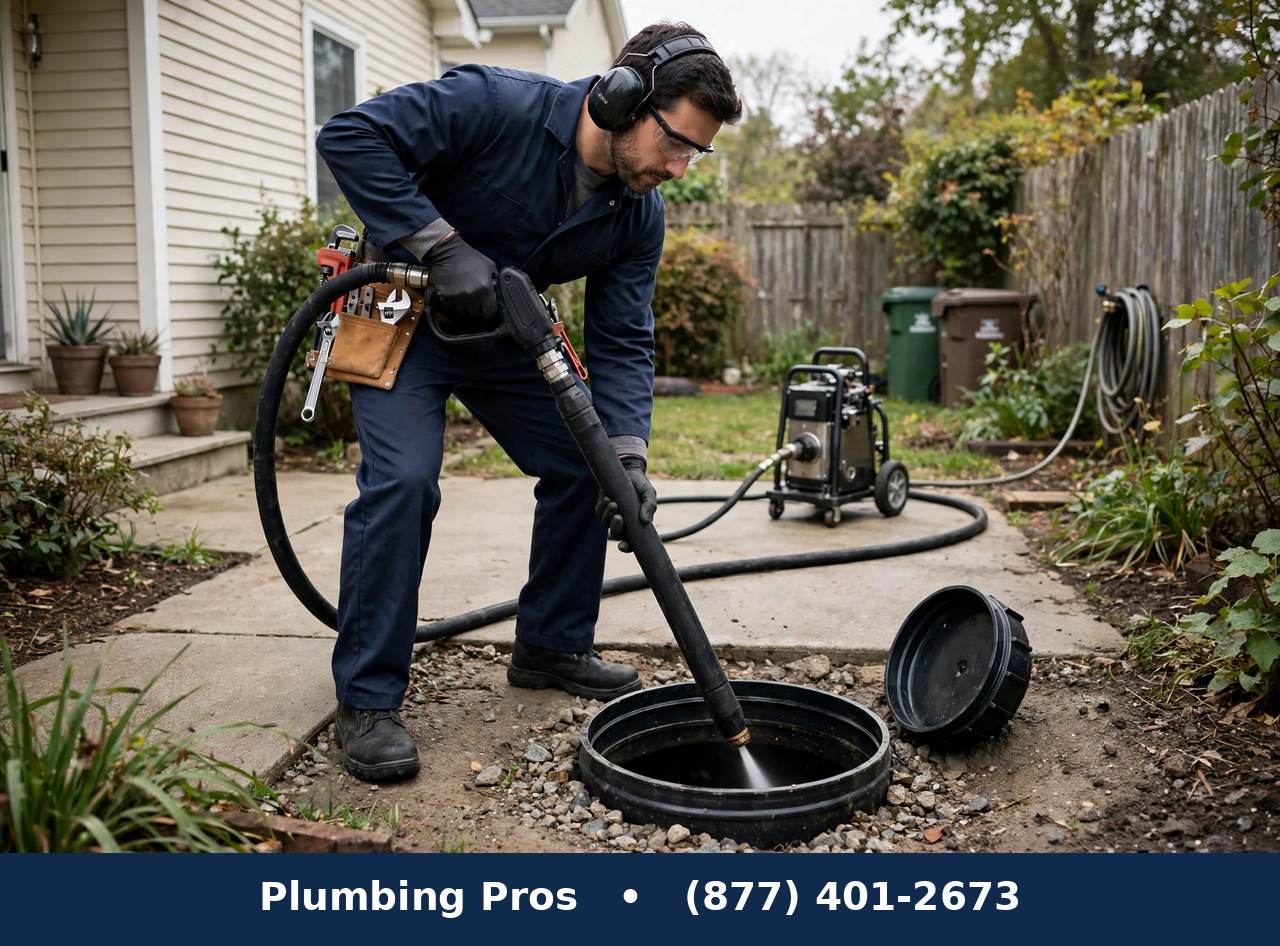
Next, the jetting hose feeds through the cleanout with a nozzle machined to fire water backward at an angle. Those rearward jets do two jobs at once: they blast the pipe wall in a full circle, and their thrust pulls the hose deeper into the line on its own. The operator controls the advance, pausing where the camera showed heavy buildup. A rotating head handles grease and scale, while a penetrating head handles roots.
The operator makes return passes until the water coming back runs clear. Then the camera goes back in for a final look, so the result is verified on screen before the tech packs up.
What affects the cost
There is no flat price for hydro jetting, because no two lines are alike. The length and diameter of the pipe matter — a short kitchen line and a long main to the street are different jobs. So does the type and severity of the blockage: soft grease clears faster than thick scale or a heavy root intrusion.
Access matters too. A line with a clear, convenient cleanout is straightforward; one that needs an access point created takes more work. The condition of the pipe plays a role, since fragile or damaged sections may need repair first. Commercial lines — restaurant grease laterals, laundromats, apartment mains — usually involve longer runs and heavier buildup than a typical home line.
The only way to get an exact number is a look at the actual line. Talk to Plumbing Pros about what is happening with your drains, and the team can quote the job after the inspection.
How we serve your area
Plumbing Pros brings hydro jetting to homes and businesses across the coverage area. That includes older homes with cast iron lines rough with scale, newer homes fighting root intrusion, and commercial kitchens whose grease lines clog on a schedule.
Every job gets the same process: camera first, the right pressure and nozzle for the pipe, and a verified clean line on camera afterward. If drains in your home or business keep clogging, Plumbing Pros can take a look and recommend the right fix.
Features
- Camera inspection before jetting to confirm the pipe is sound
- Pressures up to about 4,000 PSI, matched to the pipe and blockage
- Rear-facing nozzles that scrub the full circumference of the pipe wall
- Rotating heads for grease and scale, penetrating heads for roots
- Adjustable pressure to suit different pipe materials
- Water-only cleaning — no chemical cleaners down your drains
- Final camera check to verify the line runs clear
Benefits
- Removes the wall buildup that snaking leaves behind
- Breaks the cycle of the same drain clogging every few months
- Stops repeat backups at the source instead of masking them
- Cleans kitchen lines, laundry lines, and main sewer lines
- Suits sound pipes of many common materials
- Keeps commercial drains flowing with scheduled maintenance
Frequently asked questions
Is hydro jetting safe for my pipes?
It is safe for sound pipes of many common materials when the pressure is matched to the line. That is exactly why the camera inspection comes first: it shows the condition of the pipe before any pressure is applied. Lines that are collapsed, badly cracked, or severely corroded are not candidates for jetting.
How long does a hydro jetting job take?
Most residential jobs finish in a single visit, though the time depends on the length of the line and the severity of the buildup. Long commercial mains with heavy roots can take longer.
What is the difference between hydro jetting and snaking?
A snake cuts a hole through a clog; jetting scrubs the full pipe wall clean. Snaking restores flow while leaving grease, scale, and root hairs behind — the very material that causes the next clog. Jetting removes that material, so the pipe drains at closer to full diameter for much longer.
Will hydro jetting remove tree roots?
Yes — the right nozzle cuts root hairs at the joints and flushes them out of the line. It works best as a cleaning step on a pipe that is otherwise intact. If roots have collapsed or broken the pipe, the camera will show it, and a repair is the real answer.
How much does hydro jetting cost?
It depends on the length and diameter of the line, the type and severity of the blockage, and how easily the line can be accessed. A camera inspection is usually part of the job, and commercial lines with heavy buildup take more work than a typical home drain. Talk to Plumbing Pros for an exact quote on your line.
Does hydro jetting use chemicals?
No — hydro jetting cleans with water alone, at high pressure. Nothing corrosive goes into your pipes or the drain system. That makes it a good choice for lines where harsh chemical cleaners have already failed or are not wanted.