Main Water Line Replacement Near Me
Starting price: Call for pricing
When pressure is low at every fixture, water runs rusty, or the service line has already been fixed more than once, the pipe itself is finished. Plumbing Pros replaces the main water line from meter to house with new pipe, so clear water and steady pressure return for good.
What main water line replacement is
Main water line replacement renews the buried pipe that carries water from the public meter into your home. It is a single project: the old service line is retired and a new one takes its place, feeding every fixture in the house. The job covers that one underground run, not the plumbing inside your walls.
Most replacements use one of two materials. Copper is the traditional choice where local code and soil conditions support it. Approved polyethylene is common where flexibility and corrosion resistance matter more, since plastic pipe cannot rust from the inside the way old metal pipe does. Your plumber should explain the trade-offs before you choose, because the right material depends on your soil, your water, and the local code.
Replacement is different from a repair. A repair opens one spot and fixes one break. Replacement treats the whole run as finished and installs a new line end to end.
Signs your main water line is failing
One bad fixture is a fixture problem. A failing main water line shows up everywhere at once:
- Low pressure at every tap, not just one — the shower fades when the washing machine fills
- Rusty or discolored water that keeps coming back after the line clears
- A water bill that climbs without any change in how much water you use
- Soggy spots or strips of unusually green grass along the line's route
- The same underground line leaking again after earlier repairs
- Hissing or gurgling sounds when no fixture is running
Weak pressure alone does not prove the line is bad. A failing pressure regulator, clogged aerators, or a municipal supply issue can look the same, which is why diagnosis starts with measuring. A plumber reads pressure at the meter and again inside the house. Strong pressure at the street that fades indoors points squarely at the line in between.
How the replacement process works
Every job starts with a site visit. The diagnosis is confirmed against the pressure readings first. Then the route is walked to map the line and note obstacles such as trees, driveways, and patios, so the plan is built before any digging begins.
Planning covers material, size, and permits. Copper or approved polyethylene is chosen for the soil and the local code. Permits are pulled before work begins.
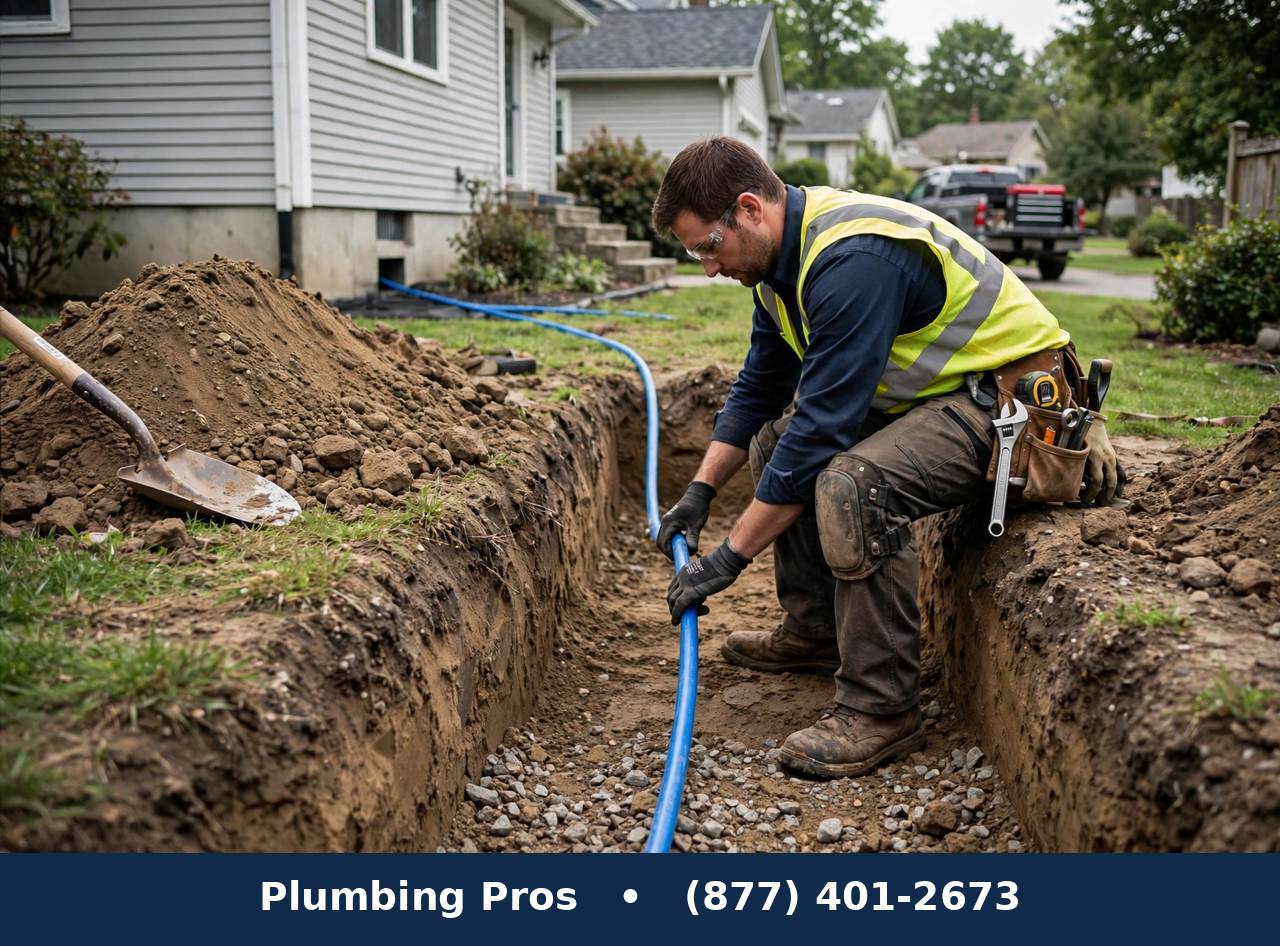
On the work day, the crew lays the new pipe along the planned route. It is joined at the meter and where the line enters the house, and the run is pressure-tested end to end.
The old line is capped and abandoned in place, so there is no need to dig the full length of it out. The trench is backfilled in compacted lifts as the crew finishes.
What affects the cost
The length of the run matters most. A meter sitting near the house means a short, simple trench. A meter across a deep or sloped lot means more digging, more pipe, and more restoration.
Access shapes the job as much as distance. A clear lawn digs easily, while driveways, patios, mature trees, and tight side yards add labor and care. Rocky or unstable soil can slow the work too.
Materials and diameter play a part. Copper and polyethylene price differently, and a larger diameter for a busy household uses more material. Permits and inspections add fixed steps, and whether the old line is simply capped or fully removed changes the scope.
Planned work and urgent work are different jobs. A replacement scheduled in advance follows the process above step by step. A line that has burst and is flooding the yard has to be dealt with right now, which changes the shape of the project. For an exact figure, ask for a quote based on the actual route, soil, and materials at your property.
Repair or full replacement: which is right
Not every line problem needs a full replacement. A single leak in an otherwise sound, modern pipe is a repair job: expose the spot, fix it, backfill, done.
Replacement earns its place when the pattern says the pipe is finished everywhere. Repeated leaks on the same run, corrosion visible along the pipe, water that stays discolored, and pressure that is low at every fixture all point the same way. Old galvanized or lead lines fall into this group sooner, because they deteriorate along their full length rather than failing in one spot.
An honest plumber measures first and recommends only what the evidence supports. If the readings and the pipe's condition say a repair will hold, that is the right answer. If they say the next leak is already forming, replacement is.
How we serve your area
Plumbing Pros handles main water line replacement for the homes and small businesses around here: single-family houses, duplexes, and light commercial buildings with their own service lines. Older streets with aging galvanized pipe get careful route planning around established landscaping. Newer developments get clean installs that meet current code.
Every job starts with a pressure test and an honest read of what the line needs. If replacement is the answer, you will know the material, the route, and the plan before any digging starts.
Features
- Full meter-to-house pipe replacement, not another patch
- Copper or approved polyethylene pipe matched to code and soil
- Pressure readings at the meter and inside before any work is planned
- Pipe sized for the home's fixture count and the run's length
- Lawn, soil, and pavement edges restored once the trench is filled
Benefits
- Steady pressure at every fixture at the same time
- Clear water without rust or sediment
- No more repeat digs for new leaks on the same old line
- A service line you can stop thinking about
- One planned project instead of emergency leak repairs
- Pipe sized for the home's actual water use, not the old line's
Frequently asked questions
How do I know my main water line needs replacing instead of just another repair?
Look at the pattern, not the single leak. One isolated break in a sound pipe is a repair. Repeated leaks, corrosion along the run, rusty water, and low pressure at every fixture mean the pipe is failing everywhere, not in one spot.
How much does a main water line replacement cost?
The only honest answer comes from a quote, because every route, soil type, and access situation is different. Ask for the quote in writing before anything is scheduled, with the factors behind the number explained in plain terms.
Will I be without water during the replacement?
Only during the switchover itself. The shutoff is scheduled with you in advance, and normal service returns once the new line is connected and tested.
Will replacement tear up my whole yard?
Not necessarily. Where the ground and route allow, trenchless methods install the new line with only small entry and exit pits. Open trenching is used when the route demands it, and the trench is backfilled and the surface restored afterward.
What kind of pipe will be installed?
Copper or approved polyethylene. Your plumber picks based on code, soil, and water conditions, and should explain the choice before work starts.
Should old lead or galvanized pipe be replaced before it fails?
In most cases, yes. These are the pipes behind the majority of rusty-water and pressure complaints in older homes. Replacing them on your schedule is easier than doing it after a failure forces the work.