
Outdoor Faucet & Hose Bibb Services Near Me
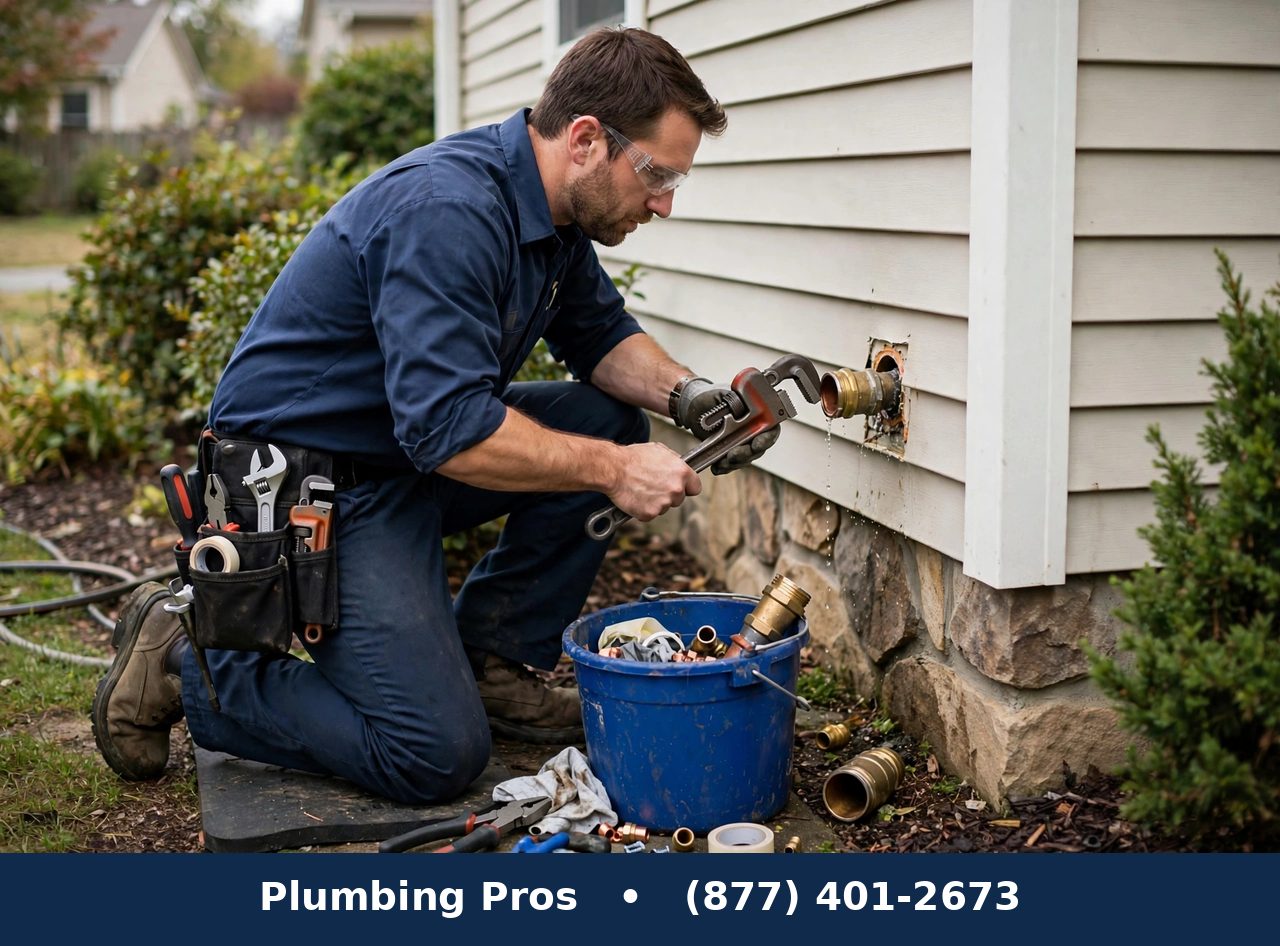
Starting price: Call for pricing
Plumbing Pros repairs, replaces, and winterizes outdoor faucets and hose bibbs — the wall-mounted valves that feed your garden hose, sprinklers, and pressure washer. From a dripping washer to a burst frost-proof sillcock, we fix every failure point so water flows outside your home without damaging anything.
What Outdoor Faucet and Hose Bibb Service Covers
Outdoor faucet and hose bibb service covers the repair, replacement, and seasonal care of the water valves on your home's exterior wall. That includes fixing leaks at the spout or stem, rebuilding worn washers and seats, upgrading to frost-proof sillcocks, and adding backflow protection. It does not extend to sprinkler controllers, buried lines, or underground yard hydrants beyond the wall shutoff.
Most houses have one of two designs. The older style is a compression bibb: water shuts off right at the outside wall, and the whole valve body sits exposed to cold air. The newer style is a frost-proof (or freeze-free) sillcock, with a long stem that places the shutoff seat several inches inside the heated wall. A third design uses a quarter-turn ball valve that shuts off with a simple ninety-degree twist of the handle. Each type fails in its own way. Compression bibbs wear out their washers and packing. Frost-proof models burst when a connected hose traps water in the exposed barrel over winter. Ball-valve bibbs rarely drip but can seize if left unused.
When You Need a Plumber for Your Outdoor Faucet
A hose bibb usually fails gradually and tells you exactly what is wrong:
- Water keeps dripping from the spout after the handle is fully closed
- Water sprays or weeps around the handle stem while the faucet runs
- The handle spins freely or takes force to turn at all
- Flow is weak even with the faucet wide open
- Threads are too corroded or damaged to hold a hose coupling
- The valve body or wall mounting is cracked, split, or pulling loose
- Water stains appear on the interior wall behind the faucet
- The faucet stopped working after a hard freeze and may hide a burst pipe
Any of these signs deserves attention before the next cold snap or the next long watering session.
How the Process Works
The visit starts with a short diagnosis at the fixture. We shut the water off at the interior shutoff valve serving that faucet, then test the spout, stem, packing nut, and the wall connection to find where water is escaping. For a simple leak, the fix is often a washer, seat, or packing replacement done on the spot with the valve body still in the wall.
When the valve is cracked, seized, or too worn for a rebuild, we recommend replacement. The old bibb comes off, the supply pipe inside the wall is inspected, and the new fixture is sweated or threaded into place and secured to the wall. If the home still has an interior shutoff serving that line, we confirm it holds. We add a vacuum breaker at the hose threads whenever one is missing, and we walk you through what we did before leaving. After the work, we open the new valve fully, check every joint for drips, and confirm the hose coupling threads on and off cleanly.
What Affects the Cost
Every job is priced on what it actually involves, and a few factors move the number up or down. The design of the fixture matters: a basic compression bibb is the simplest part to rebuild. A frost-proof sillcock costs more and takes longer because the replacement reaches deep into the wall. The condition of the supply pipe inside matters too — clean copper or PEX makes a straightforward swap, while corroded pipe or a failed interior shutoff adds work.
Access is another factor. A faucet on a clear exterior wall is quick to reach; one boxed in by decking, siding, or finished basement space slows the job down. The scope of the repair matters most of all. Replacing a washer is a short visit. Replacing a burst sillcock, repairing wall damage, or adding a new shutoff valve is a bigger project. Any firm number comes from an on-site look at the fixture and the pipe behind it, which is how a written estimate is prepared before work begins.
How We Serve Your Area
Plumbing Pros works on the exterior plumbing of houses across the communities we serve. That means everything from older homes with original compression bibbs to newer builds with frost-proof fixtures. Many of our service calls come from homes that saw their first hard winter with a new owner. Others come from owners discovering a drip that has been quietly soaking the foundation for a season. The work is the same everywhere: diagnose the valve, fix the failure point, and leave the fixture ready for hoses, sprinklers, and pressure washers.
Seasonal care is part of the picture too. Before cold weather arrives, we can add interior shutoff valves, insulate exposed sections, or walk through the hose-disconnect routine that keeps frost-proof models working the way they were designed. Plumbing Pros treats the outdoor faucet like any valve inside your house — small, simple, and worth getting right.
Features
- Leak diagnosis at the spout, stem, and wall connection
- Washer, seat, packing, and O-ring replacement on site
- Frost-proof sillcock upgrades with interior shutoff seats
- Sweat-soldered and threaded connection repairs
- Vacuum breaker and backflow protection installation
- Seasonal shutoff valve installation and winterizing prep
Benefits
- Stops constant drips that soak siding and stain foundations
- Protects pipes from freeze cracks and burst damage
- Restores full pressure to hoses and sprinklers
- Keeps yard water from flowing back into drinking water
- Extends fixture life without replacing the whole valve
- Fixes one small valve before it becomes wall damage
Frequently asked questions
Why does my outdoor faucet drip even when I crank the handle tight?
A worn washer or a scored valve seat is the usual cause. Cranking harder only grinds the washer further and can crack the seat. We replace the washer and reface or replace the seat so the faucet seals with normal hand pressure.
What is a frost-proof sillcock, and do I need one?
A frost-proof sillcock places the actual shutoff seat several inches inside the wall, where warmth keeps water from freezing. It is the standard upgrade for any faucet that has burst or leaked during past winters. Even so, the hose must come off before freezing weather so the barrel can drain.
My outdoor faucet stopped working after a hard freeze — what happened?
Ice likely split the valve body or the pipe behind the wall. Water may be trapped in the line or leaking where you cannot see it. This needs a prompt look, since a burst pipe can soak the wall cavity long before anything shows outside.
Why does water spray around the handle when the faucet is running?
That is the packing — the seal around the stem — telling you it has loosened or dried out. Tightening the packing nut often fixes it; if the packing is brittle, we replace it. A valve that seals at the stem stops wearing out its own handle parts.
Do I really have to disconnect the hose every winter?
Yes. A connected hose traps water in the exposed barrel of the sillcock, and that water can freeze and crack the valve no matter how frost-proof it is. Disconnecting the hose and letting the faucet drain takes less than a minute.
How much does outdoor faucet repair or replacement cost?
No two jobs are identical, so pricing reflects the scope of the work. A washer replacement and a burst-pipe replacement are very different jobs, and access, pipe condition, and fixture type all shape the final number. A technician who sees the fixture in person can quote it accurately before any work starts.