Pipe Leak Repair Near Me
Starting price: Call for pricing
A pipe leak is found, opened up, and fixed at the source — the failed section is cut out and rebuilt to match your system, then pressure-tested. Plumbing Pros handles visible drips and hidden leaks inside walls, ceilings, slabs, and floors. Every joint is tested before the job is done.
What pipe leak repair covers
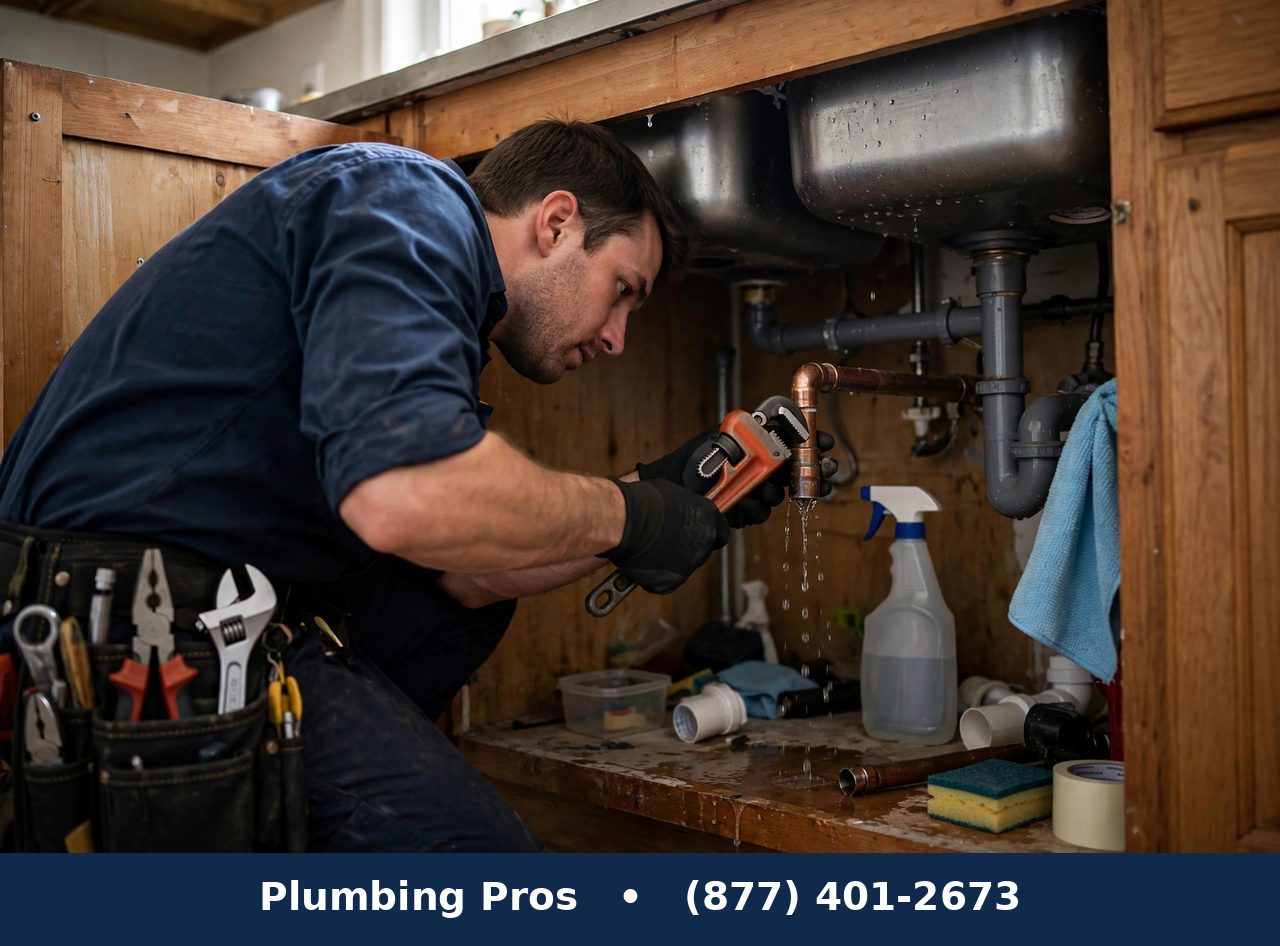
Pipe leak repair is the work of finding a failed section of water pipe and fixing it so it holds pressure again. A technician locates the leak, opens the smallest area needed to reach it, cuts out the damaged section, and joins in new pipe matched to your system. It covers both pressurized supply lines and drain lines.
What it does not cover is a full system replacement. If one joint failed from a single bad connection, only that spot needs fixing. If leaks keep appearing in run after run, the pipe material itself is the problem and a partial repipe of those runs is the honest answer. A good technician tells you which one your situation calls for before any pipe is cut.
Matching matters because pipe systems are picky about how they join. Copper takes soldered or press fittings, PEX uses expansion or crimp fittings, and CPVC uses solvent welding. Mixing materials the wrong way causes galvanic corrosion where dissimilar metals meet, which is exactly how many leaks start. The repaired section should hold to the same standard as the pipe around it.
Signs you need pipe leak repair
You need pipe leak repair when water is escaping somewhere it should not. Look for stains on ceilings and walls, warped cabinets, musty smells near plumbing, and hissing inside walls. A water bill that climbs without extra use is one of the strongest clues a hidden leak is at work.
- Brown or yellow stains on ceilings and walls
- Warped cabinets or buckling flooring near plumbing
- A musty smell near sinks, tubs, or water heater closets
- Hissing or dripping sounds inside walls when the water is off
- A water bill climbing with no change in use
- Puddles under sinks or around supply line connections
A slow weep does more damage over time than a dramatic burst. A burst gets noticed and shut off within the hour. A weep inside a wall never dries out, so it soaks framing and feeds mold month after month. If symptoms point to a leak, having it checked early is always the cheaper path.
How the repair process works
It starts with what you have noticed. Where the stain or sound is, how long it has been there, and whether it gets worse when water runs all narrow the search. You do not need to diagnose anything yourself — these details just speed up the hunt.
Next comes locating. Listening equipment and moisture readings trace the leak to its source before anything is opened. Water travels along framing, so the damage you see can sit several feet from the failed pipe. Pinpointing first means the opening we cut stays small and targeted.
Then the repair itself. The damaged section is cut out and new pipe matched to your material and diameter goes in. The joints are made with the method your system uses — solder, press, crimp, or solvent weld. Each joint is pressure-tested before we close up. The line is flushed clean, the access opening is sealed, and the area is left as we found it.
What affects the cost
No two leaks cost the same because the work around them varies. A drip under a sink with easy access takes less time than a failure buried behind tile in a shower wall. The material matters too: some piping and fittings take longer to join and test than others. How much pipe must be replaced is the biggest factor — a single fitting versus several feet of corroded run.
Access and finish repair add to the picture. Slab leaks take more work to reach than pipes in an open crawl space. If opening a wall means cutting tile or textured drywall, restoring that finish is part of the job's scope. Urgent work to stop active flooding is priced differently from a planned repair. The only way to know your number is a look at your specific situation — ask for a quote based on what the technician finds.
How we serve your area
We fix leaks in single-family homes, townhouses, condos, and small businesses across the service area. Most of our work happens in kitchens, bathrooms, basements, and utility closets — wherever supply lines run. Older homes with galvanized or aging copper get extra attention, because those systems fail in patterns we know how to read.
Plumbing Pros handles both the find and the fix in one job. There is no separate diagnostic visit and repair visit — locating the leak is part of the repair process. If the inspection shows damage beyond a simple repair, we explain the repipe option plainly and leave the decision with you. Request service, describe what you are seeing, and that is all it takes to start.
Features
- Pinpoint leak location before any walls are opened
- Copper, PEX, CPVC, and galvanized pipe repair
- Soldered, press-fit, crimp, and solvent-weld joints
- Pressure testing of every repaired joint
- Slab and wall-concealed leak access
- Partial repiping when damage runs through a whole line
Benefits
- Stops water damage before it spreads to more of your home
- Keeps drywall, cabinets, and flooring intact
- Restores full water pressure and normal flow
- Removes the trapped moisture that feeds mold
- Repairs matched to your existing pipe system
- Locating and fixing handled in one job
Frequently asked questions
How can I tell if I have a hidden pipe leak?
Watch for stains, musty smells, hissing inside walls, and warm spots on floors. The meter test is simple: turn off every faucet and appliance, then check your water meter. If it still moves, water is going somewhere it should not.
Can a small drip really wait a few weeks?
It is better not to wait. A slow weep inside a wall or ceiling never dries out, and the damage compounds over weeks. Small leaks are also the cheapest to fix — the longer water runs, the bigger the repair.
Will you have to tear open my walls?
Only a small, targeted opening. We locate the leak first, so cutting stays limited to the failed spot. Access openings are sealed after the repair is tested.
How much does pipe leak repair cost?
It depends on where the leak is, how hard it is to reach, the pipe material, and how much pipe must be replaced. Those factors are why every quote is based on your specific job. Describe what you are seeing and request a quote.
Should I repair the leak or repipe the line?
Repair the spot when one joint or section has failed on otherwise sound pipe. Consider a partial repipe when leaks keep appearing or the run shows widespread corrosion. The inspection makes the answer clear.
What should I do before the technician arrives?
If you can, shut off water to the affected area or the main valve to limit damage. Move belongings away from the wet spot and note when the symptoms started. Photos of stains help too.
Is a leaking pipe an emergency?
If water is flowing where it should not and you cannot stop it, treat it as urgent and shut off your main valve. A controlled drip with no spreading can usually be scheduled. Either way, stopping the water sooner saves the most damage.