Sewage Ejector Pump Services Near Me
Starting price: Call for pricing
Any bathroom, laundry room, or wet bar below the main sewer line needs a lift. Plumbing Pros installs, replaces, and services sewage ejector pump systems that move wastewater up to your sewer lateral. We size the basin and pump to your fixtures and explain every step in plain language.
What a sewage ejector pump system actually is
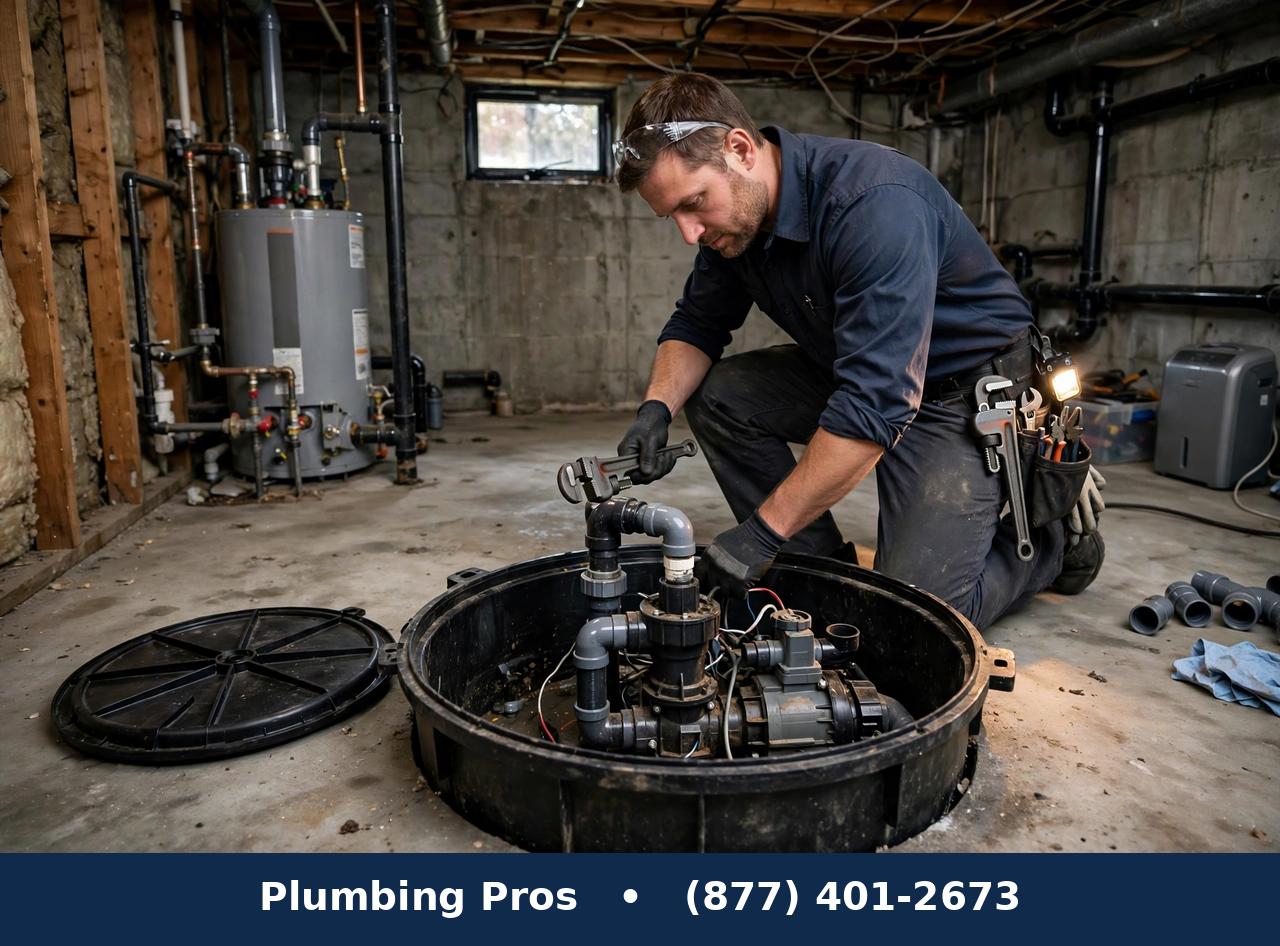
A sewage ejector pump system is the machinery that lets below-grade plumbing drain uphill to the sewer line. Wastewater from basement toilets, sinks, showers, and washing machines flows by gravity into a sealed basin in the floor. When the water level rises, a float switch turns the pump on, and the pump pushes the wastewater up through a discharge pipe to the main sewer line. That is the whole job: lifting waste to where gravity can take over.
The basin is the heart of the setup. It is a sealed tank with a gasketed, bolted lid that locks wastewater and odor inside. Inside the basin sits the pump itself. You get either an effluent pump for mostly liquid waste or a grinder pump, which breaks solids into fine slurry before pushing them out. Which type fits your home depends on the fixtures connected to it; a basement bathroom with a toilet calls for different equipment than a laundry room alone.
The rest of the system keeps the pump doing its job safely. A check valve on the discharge line stops wastewater from flowing back into the basin after each cycle. A shutoff valve lets the system be serviced without spilling sewage on the floor. Proper venting keeps air moving so drains flow smoothly and the basin stays at safe pressure. A high-water alarm mounted nearby sounds off the moment the level climbs past normal — your early warning that something needs attention.
When a home needs ejector pump work
You need an ejector system any time plumbing sits below the level of the main sewer line. Basement bathrooms, laundry rooms, wet bars, and guest suites are the usual cases. If you are finishing a basement or adding fixtures downstairs, the new drains cannot work without a pump to lift the waste.
Existing systems also tell you when they are in trouble. Watch for these signs:
- Basement fixtures that drain slowly, gurgle, or back up
- Sewage odors near the basin or in basement drains
- A pump that runs constantly, cycles too often, or never starts
- The high-water alarm sounding
- Water standing in the basin long after fixtures have drained
A failed ejector is the one plumbing failure nobody wants to discover by smell. If any of these show up, the system deserves a look before a backup ruins flooring or drywall.
How the process works, step by step
Every job starts the same way: you tell us what is happening. A basement remodel that needs new drains, a pump that quit suddenly, an alarm that keeps sounding — we listen first, then schedule a visit.
On site, we look at the whole setup. We check the basin size against its fixtures, then inspect the pump, float switch, check valve, discharge line, and alarm. For new installs, we measure the lift the pump must clear and map the discharge line's route to the sewer lateral. For a repair, we find the failed part rather than guessing.
Next comes the plan. We explain what the system needs in plain language and recommend the right pump type for your fixtures. A bathroom with a toilet needs equipment that handles solids; a laundry room alone does not. Sizing matters — an undersized pump strains and fails early, while an oversized one short-cycles and wears out its switch.
Then the work itself. New installs get a properly sized sealed basin, the pump, a check valve, a shutoff valve, venting, and a high-water alarm on a dedicated circuit. Replacements swap the pump and any worn parts while reusing a sound basin. Before we leave, we fill the basin and run the pump through several full cycles, test the alarm, and walk you through what we found and what to watch for.
What affects the cost of the work
Cost questions come up on almost every ejector job. The honest answer is that it depends on your system. A straight pump replacement in a sound basin is a different job from a full new installation for a basement remodel.
The factors that shape the price most are scope, access, and equipment. New basin excavation costs more than swapping a pump into an existing one. A grinder pump costs more than an effluent pump because it does more work. Poor access — a basin buried under a finished floor with no cleanout — adds labor. Related electrical work for the alarm circuit, and any permits your locality requires, are part of the picture too.
We never quote a number sight unseen, because a guess helps no one. The number listed on this page gets you a real answer. Describe your setup, and we will tell you what the job involves and what it will cost before any work starts.
How Plumbing Pros serves your area
Plumbing Pros works in homes and small businesses across the area — finished basements, unfinished ones, rental properties, and home offices with basement bathrooms. Basement remodels are our most common call: contractors bring us in to install the ejector system before the tile and paint go down, because the plumbing has to come first.
We also help homeowners whose systems have quietly aged past their prime. A pump that has been cycling since before you bought the house deserves an honest inspection before it quits on a laundry day. Regular checkups catch worn float switches, tired check valves, and basin issues while the fix is still small.
Reach us through the number on this page. We explain what we find, give you straight options, and leave your basement cleaner than we found it.
Features
- New ejector pump installation for basement remodels and additions
- Full pump replacement when the old unit burns out or fails
- Float switch, check valve, and discharge line repairs
- Sealed basin setup with gasketed lid, venting, and alarm
- High-water alarm installation and testing
- Preventive inspection and maintenance checkups
Benefits
- Basement fixtures drain just like the ones upstairs
- Wastewater stays sealed inside the basin, away from your home
- Early warning alarm before a small problem becomes a backup
- Right-sized pump that doesn't strain or short-cycle
- Finished basements stay dry, clean, and usable
- Quiet equipment tucked out of sight in the floor
Frequently asked questions
What's the difference between a sewage ejector pump and a sump pump?
They look similar but do opposite jobs. A sump pump moves clean groundwater away from your foundation; a sewage ejector pump moves wastewater from below-grade fixtures up to the sewer line. The two should never share a pit, because sewage belongs in sealed pipe.
How do I know my ejector pump is failing?
Slow drains, gurgling, sewage smells, a pump that runs constantly or never starts, and an alarm that sounds are all warning signs. Any one of them means the system deserves an inspection before a backup causes damage.
How much does sewage ejector pump service cost?
It depends on scope, access, pump type, and any electrical or permit needs. A pump swap in a sound basin is simpler than a full new installation with excavation. The number on this page gets you a firm quote before any work starts.
Can I add a basement bathroom without an ejector pump?
Only if the new fixtures sit above the main sewer line — which basement fixtures almost never do. In nearly every basement bathroom or laundry addition, an ejector pump system is the only way the drains can work.
What happens if the pump fails during a power outage?
Without power the pump can't run, so wastewater collects in the basin until power returns. Avoid using basement fixtures during an outage, and make sure the high-water alarm has battery backup so it can warn you.
How often should the system be inspected?
A yearly checkup is smart for most homes. A technician tests the float switch, check valve, and alarm, clears the basin, and spots wear before it becomes a failure. Busy households with heavy basement use benefit from more frequent visits.