Sewer Camera Inspection Near Me
Starting price: Call for pricing
A sewer camera inspection is a live video look inside your sewer line — no digging required. Plumbing Pros runs a waterproof camera through the pipe from the house to the city main, showing exactly where roots, cracks, bellies, or blockages sit. You watch the same screen and keep the recording, so every repair decision comes from evidence, not guesswork.
What a Sewer Camera Inspection Is
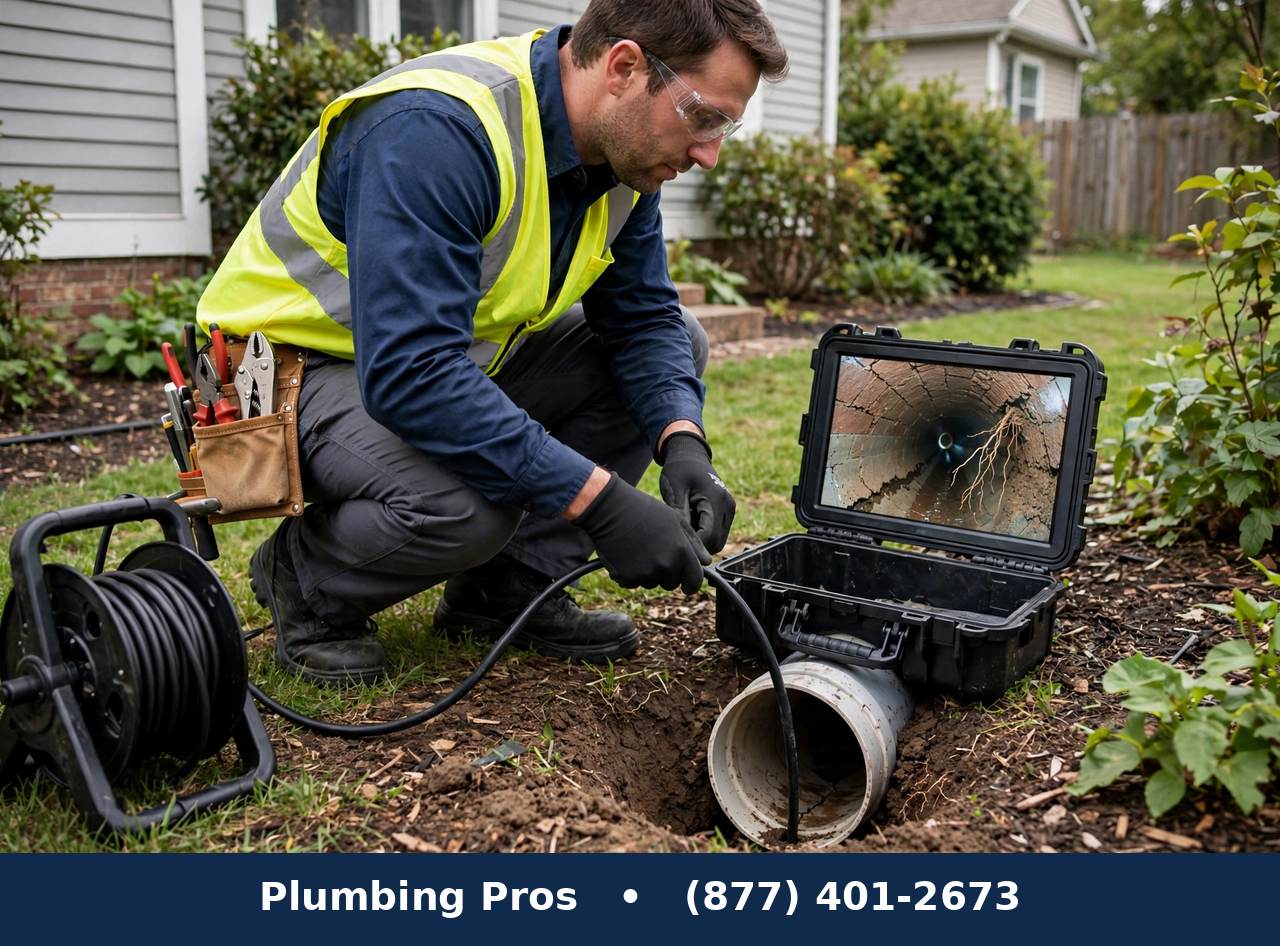
A sewer camera inspection is a video tour of the inside of your sewer line. A waterproof camera rides a flexible rod in through an access point — usually a cleanout — and sends live footage to a monitor above ground. The technician and the homeowner watch the same screen as the camera travels the full run from the house to the city main.
The inspection shows the inside condition of the pipe: cracks, root intrusion, separated joints, low spots that hold water, grease and scale buildup, and collapsed sections. It also records the line's location and depth at any point of interest, using a locator held at the surface. It does not show the outside of the pipe, and it cannot repair anything it finds — its job is diagnosis only.
When You Need One
Symptoms above ground often start underground. A scope is the right move when:
- Drains back up repeatedly, especially at the lowest fixtures in the house
- More than one fixture clogs or gurgles at the same time
- The same drain clogs again soon after a cleaning
- You are buying a home and want the private lateral checked before closing
- Mature trees grow over the line's path to the street
- A wet or sunken spot appears in the yard with no clear cause
- Repair work has been recommended based on symptoms alone
A single slow sink is usually a local clog. Patterns that repeat or spread point deeper, and that is where the camera pays for itself.
What the Camera Finds
Inside a sewer line, most problems fall into a short list. Root intrusion starts as fine hairs entering through a joint and grows into a mass that catches everything passing through. A belly is a low spot where water stands — the camera visibly swims through it — and waste settles there until the line chokes.
Offsets and separations show as a step or gap at a joint, sometimes with soil visible behind the pipe wall. Cracks and corrosion show up as fractured or rough pipe. A collapse stops the camera entirely, which itself tells you exactly where the failure is.
How the Inspection Works
- The technician finds an access point — a cleanout if one exists, or a pulled toilet or drain opening if not.
- If the line is packed with waste, a cleaning comes first, because the lens cannot see through a full blockage.
- The rod pushes through the line while footage streams to a monitor, and you are welcome to watch and ask questions as it goes.
- When something shows up, a locator at the surface reads a signal from the camera head, marking the spot and its depth with paint or a flag.
- At the end, you get a recording of the run and a plain-language summary of what it showed. You can plan the next step with the picture in front of you.
What Affects the Cost
Camera inspections are priced per job, and a few things shape that job. The length of the line and how far the camera must travel is one. Access is another — a cleanout at grade makes a quick entry, while a line with no cleanout may need a toilet pulled or an opening created.
Condition matters too. A line packed with roots or standing water can need cleaning before the camera can do its job, which adds work. The pipe material — clay, cast iron, or plastic — plays a part as well. For an exact number on your home, ask Plumbing Pros for a quote based on the actual layout.
How Plumbing Pros Serves Your Area
Plumbing Pros scopes sewer lines for the kinds of properties that make up most neighborhoods. Older houses often have clay or cast iron laterals with joints that roots love. Newer builds can hide construction debris or crushed runs until the first backup. Small businesses use the service to avoid a surprise closure from a backed-up line.
Home buyers use the service as a pre-closing check on the private lateral — the stretch between the house and the main that most municipal inspections skip. Owners with mature trees schedule repeat scopes, because roots probe every joint each growing season. Wherever the line runs, the deliverable is the same: a recording you keep and an honest read of what it shows.
Features
- Waterproof self-leveling camera on a flexible push rod
- Live footage on a monitor you watch alongside the technician
- Surface locator that marks each problem's position and depth
- Recorded video of the full run, yours to keep
- Entry through an existing cleanout — no digging to look
- Complete lateral covered, house to city connection
- Findings explained in plain language as they appear
Benefits
- Replaces guesswork with an actual picture of the pipe
- Shows the exact location and depth of each problem
- Confirms whether a cleaning truly cleared the line
- Gives home buyers a clear look before closing
- Catches small defects before they become big repairs
- Keeps digging to a single precise spot when repair is needed
- Provides recorded evidence for insurance or sale paperwork
Frequently asked questions
What is a sewer camera inspection?
A technician feeds a waterproof camera through your sewer pipe on a flexible rod, and you watch the inside of the line live on a monitor. It reveals roots, cracks, bellies, and blockages without any digging.
Does anything have to be dug up for the inspection?
No. The camera enters through an existing access point, usually a cleanout. If the line has no cleanout, the technician can pull a toilet or use a drain opening to get in.
Should I scope the sewer line before buying a house?
It is one of the highest-value checks a buyer can run. Standard home inspections almost never cover the private lateral between the house and the street, and a hidden failure there is one of the most expensive surprises a house can hold.
How long does the inspection take?
The visit is a single appointment. The camera run itself is the quick part — most of the time goes to setup, locating any problems from the surface, and walking through the footage with you.
What does a sewer camera inspection cost?
It depends on the length of the line, how easy the access is, and the line's condition. The inspection itself runs a fraction of what a repair costs, which is why most people scope first and spend second.
What happens if the camera finds a problem?
You get the recording plus the location and depth of the issue, marked on the surface. With that evidence in hand, you can get repair options based on what is actually down there instead of guessing.