Sewer Line Repair Near Me
Starting price: Call for pricing
A sewer line repair fixes the buried pipe that carries wastewater from your home out to the municipal main. Plumbing Pros starts with a video camera inspection, so the work targets the actual break, root mass, or sag — not your whole yard. Repairs range from spot fixes to trenchless pipe bursting and cured-in-place lining, each matched to what the camera found.
What sewer line repair is — and what it isn't
Sewer line repair is the work of fixing or replacing the underground pipe that carries wastewater from your home's plumbing to the municipal sewer main. It covers your lateral — the run from the foundation to the street — and not the indoor drain lines or the city's main.
A good repair fixes only what failed. A single offset joint gets a spot repair, and a line packed with root intrusion gets trenchless lining or bursting.
Full replacement is reserved for collapsed pipe, severe back-pitch, or pipe so deformed it cannot carry a liner. The camera inspection decides which one you need; guesswork does not.
Signs your sewer line needs repair
You need a sewer line repair when several fixtures fail at once. The classic pattern is a toilet that gurgles while the tub drains, or a floor drain that backs up when the washer runs. One slow sink is a drain problem; every fixture acting up together points underground.
- Backups in a tub, shower, or floor drain — especially after laundry or showers
- Toilets that gurgle or bubble when another fixture drains
- Sewage odors in the basement, crawlspace, or yard
- Soggy, sunken, or unusually green patches of lawn along the line path
- Slow drains across the whole house at the same time
- A line that needs clearing every few months instead of staying open
How the repair process works — start to finish
Every job follows the same order, and the camera is involved at both ends.
1. You describe the symptoms — which fixtures, how often, and what changed.
2. A camera runs through a cleanout or pulled toilet, recording the line end to end. You see the break, roots, or sag on screen with the tech.
3. The findings decide the method: spot repair, lining, bursting, or full replacement. You hear the options in plain language.
4. Underground utilities are marked, and any required municipal permits are pulled before work starts.
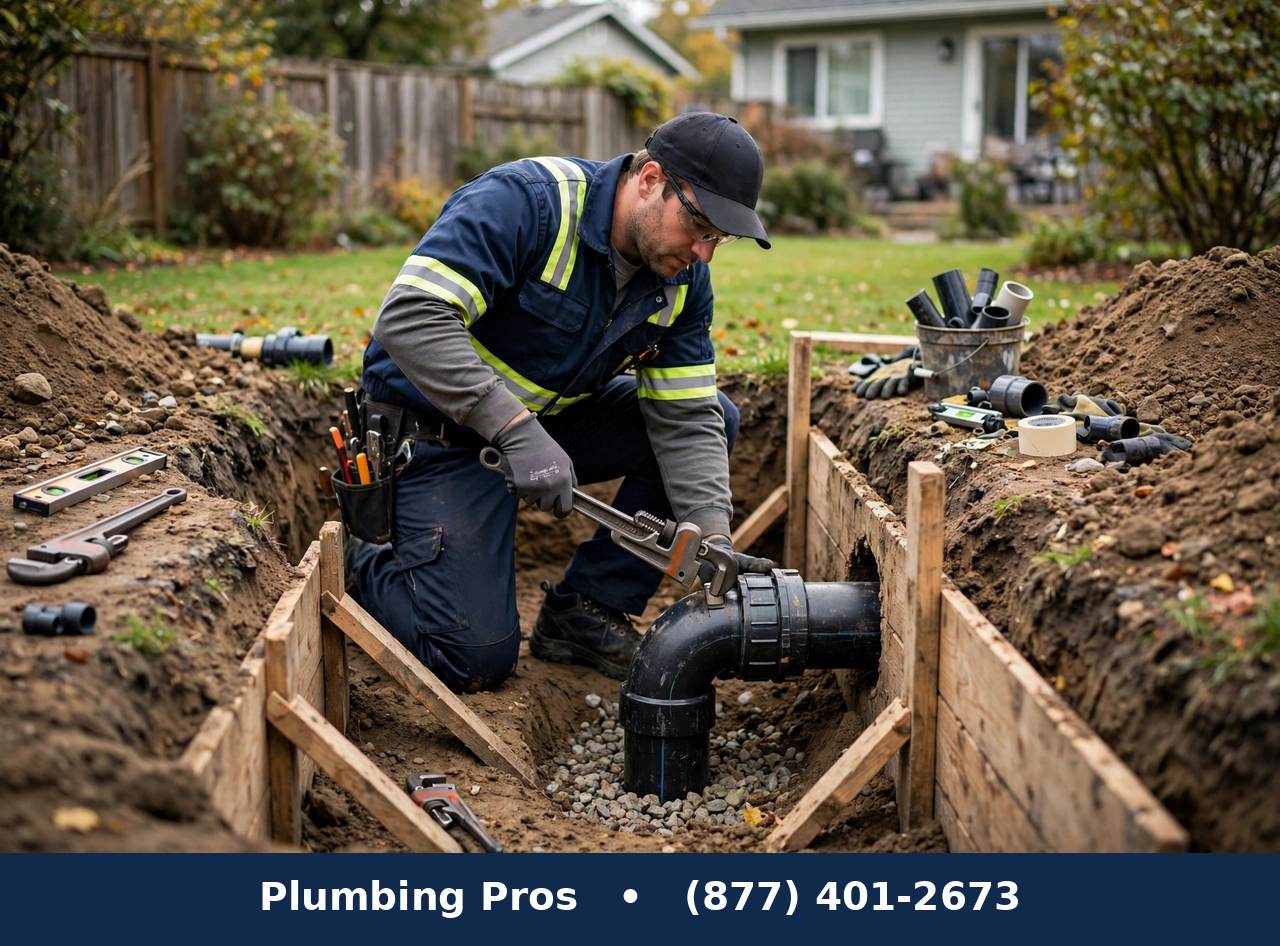
5. The crew makes the repair — bursting a new pipe through the old, curing a liner inside it, or replacing the failed section.
6. The line is water-tested, and the camera runs one last pass to confirm steady fall and clean joints. You keep the recording.
What affects the cost of a sewer line repair
No plumber can price a sewer line repair without seeing it, because the cost depends on how much pipe is damaged, how deep it sits, and which repair method fits. Several physical facts about your line set the bill — here is what they are.
- Length and depth of the damaged section — deeper pipe takes more labor and equipment
- Repair method — a spot repair uses less material and labor than bursting a full run
- Pipe material and condition — brittle clay or deformed pipe can limit trenchless options
- Extent of damage — one cracked joint costs less to fix than roots along the whole run or a full collapse
- Access — a line under a driveway, slab, or mature landscaping complicates the work
- Permits and inspections — most municipalities require them for sewer work
- Surface restoration — sod, concrete, or pavers put back after an open-trench repair
A camera inspection gives you a firm answer on all of these, which is why it comes first.
Trenchless repair vs. digging it up
The two trenchless methods — pipe bursting and cured-in-place lining — fix the line through small access points instead of an open trench. Bursting pulls a new pipe through the old one, splitting the damaged pipe outward as it goes. Lining saturates a sleeve with resin, inverts it into the old pipe, and cures it into a smooth new pipe inside the old one.
Both keep the yard, driveway, and walkways mostly intact. Digging is still the right call when the pipe has fully collapsed, lost its grade, or sits too shallow for the equipment. The camera footage tells the tech which route applies to your line.
How Plumbing Pros serves your area
Plumbing Pros handles sewer line work for single-family homes, townhomes, and small multi-unit buildings — anywhere a residential lateral runs from a foundation to a municipal main. That covers older neighborhoods with clay and cast iron laterals, suburbs with Orangeburg-era pipe, and newer developments where settling created bellies in PVC.
Every job follows the same order: diagnose on camera, explain the options in plain language, repair only what failed, and prove the result with a final camera pass. If you are seeing backups, odors, or soggy ground, the first step is the inspection — everything after that follows what the camera shows.
Features
- Video camera inspection that locates the exact point of damage
- Trenchless pipe bursting that pulls a new line through the old one
- Cured-in-place lining that seals cracks inside the existing pipe
- Spot repairs replacing only the failed section of line
- Full excavation and replacement for collapsed or back-pitched runs
- Utility marking and required permits handled before ground is opened
- Water test plus final camera pass verifying the finished line
Benefits
- Backups stop because the break or blockage itself is fixed
- Trenchless methods keep your yard, driveway, and walkways in place
- The fix is sized to the damage — never a bigger job than the line needs
- A recorded inspection shows exactly what was repaired and why
- Every drain in the home regains steady, quiet flow
- Repeat clogs end because the root cause is gone
- Correct grade and clean joints keep waste moving downhill
Frequently asked questions
How much does sewer line repair cost?
Cost depends on the length and depth of the damaged section, the repair method, the pipe material, and how much surface has to be restored. A camera inspection is the only way to get an accurate quote, since the same symptoms can mean a small spot repair or a full replacement.
How long does a sewer line repair take?
Spot repairs and trenchless jobs often finish in a day or two once permits and utility marking are done. Full replacements with open trenching take longer, especially if the line runs deep or passes under a driveway.
Can you repair a sewer line without digging up my yard?
Often, yes. Pipe bursting and cured-in-place lining work through small access points, so lawns, driveways, and walkways stay intact. A full collapse or a line that lost its grade still needs open excavation.
What causes sewer lines to fail?
Tree roots hunting for moisture enter joints and crack pipes, cast iron corrodes from the inside, clay joints shift with soil movement, and settled sections create bellies where waste stalls. Grease and wipes speed the process by catching on every rough spot.
Will a camera inspection damage my pipes?
No. The camera is a small waterproof head pushed through a cleanout or toilet opening — it never touches the pipe walls with force. It is purely diagnostic, and you get the recording.
How do I know if I need a spot repair or a full replacement?
A single break with the rest of the line sound means a spot repair. Roots along the whole run, multiple bellies, or a collapse usually mean lining, bursting, or replacement. The camera inspection shows which category your line falls into.