Sewer Line Replacement Near Me
Starting price: Call for pricing
When a sewer line keeps backing up despite repeated cleanings, the pipe itself has usually failed: bellies holding standing water, root-packed joints, or sections that have collapsed. Plumbing Pros replaces the full line from the house to the connection with new pipe set at the correct slope and sealed against roots. A final camera video documents the finished work.
What sewer line replacement is
Sewer line replacement means removing a failed underground pipe and installing a new one, usually from the house foundation to the property line or city connection. It includes new pipe, fittings, cleanouts, and restoration of the dug surface. It does not include the city's main, interior drain lines, or fixtures inside the home.
Many older lines are clay tile, cast iron, or Orangeburg, a tar-paper pipe used in mid-century homes. Each fails in a familiar way: joints shift and admit roots, soil settles and creates bellies, walls corrode or flatten into an oval. No amount of snaking changes those shapes, which is why the backups return.
The replacement pipe going in today is a different material: PVC or HDPE with gasket-sealed joints that give roots almost nothing to grab onto. A spot repair can make sense when one joint has failed and the rest of the line is sound. When the camera shows defects along the whole run, replacing the line once is the honest fix.
When you need it
One slow sink is usually a local clog. The pattern below points at the main line, and when several of these show up together, the pipe is telling you it is done.
- Several drains back up at the same time, especially lower-level fixtures
- Sewage surfaces in a tub, shower, or floor drain
- Toilets gurgle or bowl water rises and falls when other fixtures drain
- A steady sewage odor in the yard, basement, or near the foundation
- Soggy ground or a strip of unusually green grass along the line's path
- Backups return within weeks of a professional clearing
Homes with clay, cast iron, or Orangeburg pipe reach this point sooner. If you have had the line cleared more than once and the problem keeps coming back, stop paying for clearings and look at the pipe itself.
How the replacement process works
The job starts with a camera, not a shovel. A plumber feeds a camera through an access point or cleanout and records the inside of the line. You can watch the screen and see exactly what is being replaced and why.
Next comes locating. The line's path and depth are marked on the surface, and underground utilities are identified before any digging. Then the crew chooses the method: trenchless renewal where the line's condition allows it, open excavation where collapse or severe misalignment rules trenchless out.
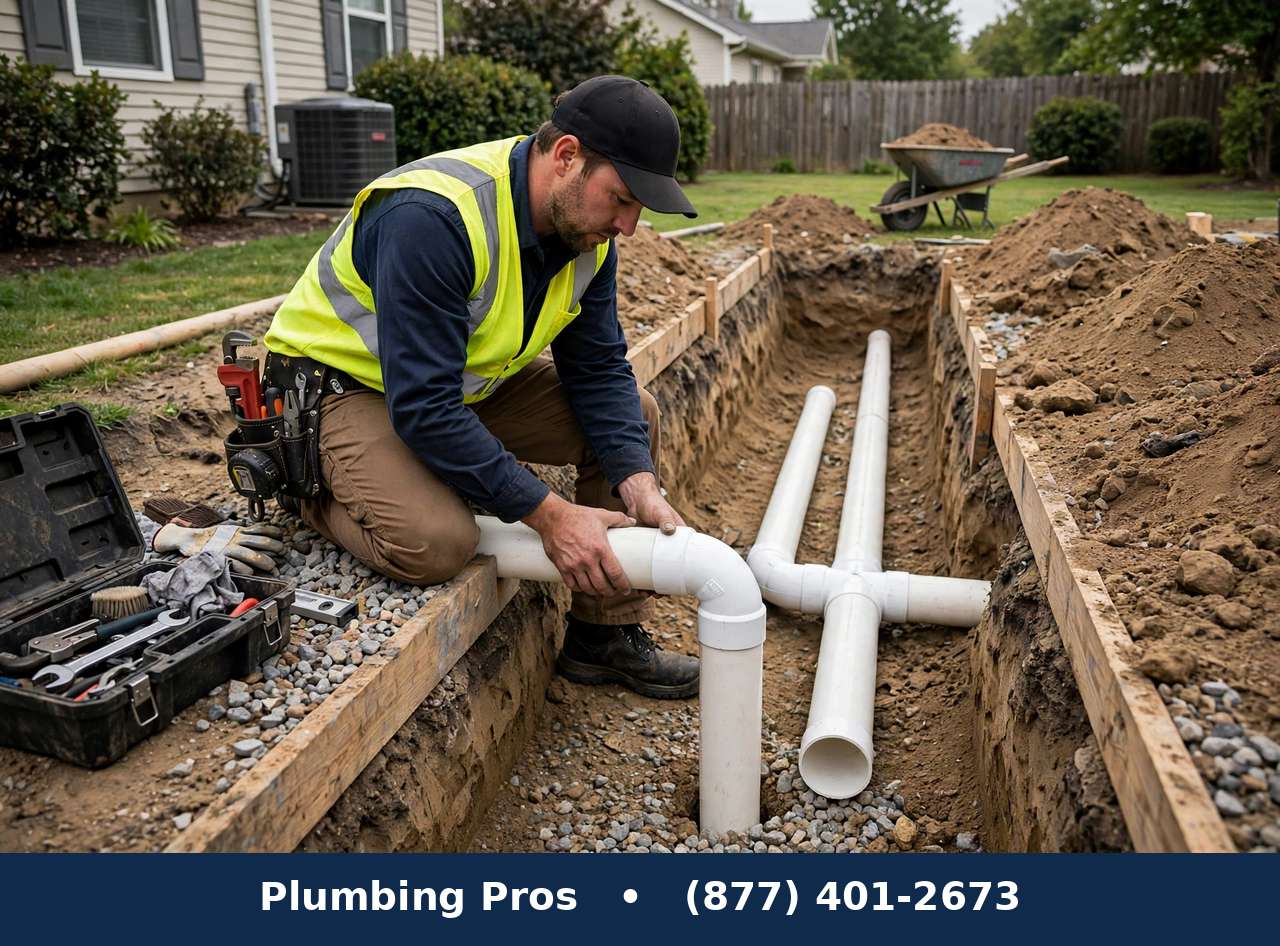
Trenchless work needs only small entry pits. Open-trench work digs the full run, setting excavated soil aside for backfill. Either way, the new pipe goes in with a consistent slope so waste flows without pooling, joints sealed, and new cleanouts placed for future access.
Before anything is buried, the line is tested for flow and leaks, then run through with the camera one more time. That final video documents the finished interior. Soil goes back in compacted layers, the grade is leveled, and the surface — grass, concrete, or otherwise — is restored.
What affects the cost
No two sewer lines cost the same, and anyone quoting without a camera inspection is guessing. The price follows the work. That work is shaped by the line's length and depth, what sits above it, the soil and site access, the method used, and local permit requirements.
A line under open lawn is straightforward work. The same line under a driveway, patio, or mature landscaping takes more labor and more restoration. Deep pipe and tight access slow equipment down. Trenchless methods can mean less surface repair, while a fully collapsed line may leave open excavation as the only option.
Permit and inspection requirements vary by municipality and add their own step to the schedule. Because every one of these factors is specific to your property, the camera inspection comes first and the quote comes second — never the other way around.
How Plumbing Pros serves your area
Plumbing Pros handles sewer line replacement for homes in older neighborhoods with clay and cast iron lines, and for tree-lined streets where root intrusion is the norm. We also replace failing Orangeburg lines when they reach the end of their run. The work is the same everywhere: show the camera footage, explain the options in plain terms, and lay out the full plan before digging starts.
Restoration is part of the job, not an afterthought. Soil is compacted as it goes back, the grade is brought level, and the surface is repaired to match. The final camera video stays with you as a record of what was installed.
If the backups keep coming back, the honest next step is to look inside the line. Schedule a camera inspection and decide with the footage in front of you.
Features
- Camera video inspection that maps the line's path, depth, and every defect before any digging starts
- Trenchless replacement options, including pipe bursting and cured-in-place lining, wherever the line's condition allows
- Open-trench replacement with correct slope, bedding, and compaction for collapsed or badly misaligned pipe
- New PVC or HDPE pipe with sealed, root-resistant joints
- New accessible cleanouts installed for future inspections and cleanings
- Final camera video documenting the completed line, with the dug surface fully restored
Benefits
- Ends the cycle of repeat backups and emergency clearing visits
- One finished project instead of digging up the same line in pieces
- Lawns, driveways, and landscaping restored when the job is done
- A new line that drains quietly and reliably, fixture to fixture
- Recorded video showing exactly what was found and what was installed
- A clear written plan before work begins, with nothing hidden in the scope
Frequently asked questions
How do I know I need a full replacement instead of another drain cleaning?
When backups return within weeks of a professional clearing, the problem is usually structural: bellies, root-packed joints, or a collapsed section that no cable can fix. A camera inspection shows the inside of the pipe, and that footage makes the call clear. Cleaning removes a blockage; replacement fixes a broken pipe.
What does sewer line replacement cost?
No two lines cost the same. The main factors are the line's length and depth, what sits above it (lawn versus driveway or mature trees), soil and equipment access, the method used, and local permit requirements. An on-site camera inspection is how you get an accurate, line-specific quote.
How long does the work take?
Most residential replacements take one to three working days once the plan is set, with trenchless methods often finishing fastest. Collapsed lines, deep pipe, or hard surfaces above the line can extend the schedule. Your crew should give you a clear timeline before digging begins.
Will my yard be torn up?
Some digging is unavoidable, but far less than most homeowners expect. Trenchless methods need only small entry pits, and even open-trench jobs restore the soil, grade, and surface when finished. Ask what your line's method means for your specific yard before work starts.
What is trenchless sewer replacement?
Trenchless replacement renews the line with minimal digging. One method pulls a new pipe through while fracturing the old one (pipe bursting); another cures a resin liner inside the existing pipe. It is not right for every line. Severe collapses and sharp misalignments usually need open excavation, so the camera inspection decides.
Will tree roots be a problem again?
New pipe with sealed joints gives roots far fewer entry points than old clay or Orangeburg lines. Keeping large trees and shrubs planted away from the line's path helps further. If a tree sits directly over the pipe, discuss it during the camera inspection so the plan accounts for it.