Sump Pump Discharge Freeze Protection Near Me
Starting price: Call for pricing
Sump pump discharge freeze protection keeps the pipe between your sump pit and the yard open through hard freezes, so groundwater leaves instead of backing into your basement. Plumbing Pros re-pitches the line so it drains fully, insulates exposed sections, and adds a freeze-relief escape fitting near the foundation. A plumber also checks the pump, float switch, and check valve during the same visit.
What sump pump discharge freeze protection is
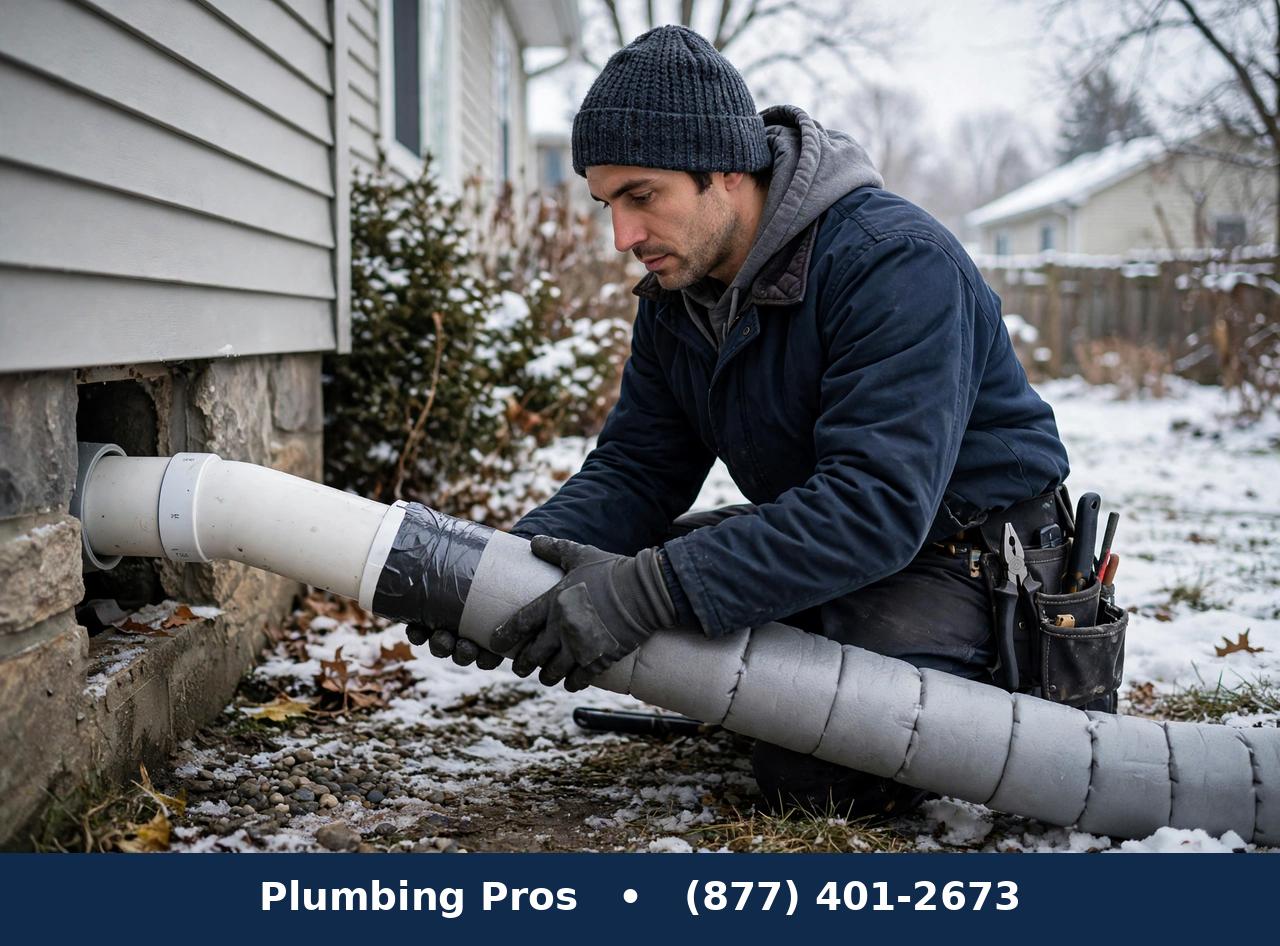
Sump pump discharge freeze protection is a winterization service for the pipe that carries water from your sump pit to the yard. A plumber re-slopes the line so it empties completely after each cycle, wraps the exposed sections in insulation, and fits a freeze-relief fitting near the foundation that opens an escape path if the outer run ices shut. The whole system is handled in one visit, so nothing is left half-done before the cold arrives.
That pipe is the weak link in winter. It starts in the warm basement, crosses cold soil or cold air, and ends at an outlet open to the sky. If water lingers anywhere along that run, a hard freeze turns it into an ice plug, and the next pump cycle pushes against a wall of ice. The pressure either burns out the pump motor or forces water back into the pit, where it can rise toward the basement floor.
This service covers the discharge run itself: the pipe from the pit, through the wall, to the outlet in the yard. It does not replace the whole pump unless testing shows the pump is failing, and it does not include foundation waterproofing or regrading the yard. Where a setup ties into a municipal storm drain, local rules decide what connections are allowed, and the work follows those rules.
When you need it
Book a visit when any of the following sound familiar:
- Your discharge line froze at least once in a previous winter
- Water sits in the pipe or trickles out long after the pump stops
- The outlet sits above ground, in a low shady spot, or across a walkway
- The run uses flexible hose or crosses an unheated crawl space or garage
- The pump runs but the basement still takes on water after cold snaps
- The line dumps close to the foundation with no clear escape route
If none of this sounds familiar, a fall check is still the right move. Finding a bad slope or a weak check valve before the first freeze is far easier than thawing an iced line in January.
How the process works
1. We walk the whole run, from the pit to the outlet, looking for low spots, sags, and exposed sections.
2. The pump is tested through full on-off cycles, the float switch is checked for sticking, and the check valve is inspected so discharged water cannot drain back into the pit.
3. Every section is re-sloped to fall steadily toward the outlet, so the pipe empties completely after each pump cycle. Any water left standing inside is what turns to ice.
4. Sections running along exterior walls, through garages, or above ground get wrapped in foam insulation, which slows heat loss through cold snaps.
5. Just outside the foundation wall, a freeze-relief fitting is added. If the outer pipe ices shut, this fitting opens an alternate path so the pump can still push water out instead of burning out against ice.
6. The outlet is extended well clear of the foundation and set so water does not pool, cross a sidewalk, or run back toward the house. Never discharge across a walkway or driveway, where it can freeze into a sheet of ice.
7. You get a plain-language summary of the routing, the relief fitting, and the backup status, plus what to watch when storms arrive.
What affects the cost
No two discharge runs are the same, so the work is priced on the job itself rather than a flat figure. The length of the run matters: a long pipe with several sags needs more re-pitching than a short straight one. The number of exposed sections sets how much insulation goes on. Adding a freeze-relief fitting or extending the outlet adds parts and labor. Access counts too. A pit buried behind storage, or a wall penetration hidden behind a finished ceiling, takes longer to work with than an open basement run. If the pump, check valve, or battery backup fails testing, replacing parts adds to the scope. For an exact number, reach out to Plumbing Pros for a quote based on your setup.
How we serve your area
Plumbing Pros handles this work for homes and businesses across the communities we serve. Basements with finished lower levels need it most, since even a small backup reaches flooring and stored belongings fast. Homes with crawl spaces and sump pits face the same risk from above-ground discharge runs. Commercial properties with below-grade storage or mechanical rooms rely on the same protection to keep operations dry. Wherever the pit sits, the goal is the same: a discharge line that drains clean and stays open through the cold.
Book the visit before the first hard freeze, when routing and insulation work goes fastest.
Features
- Full walk-through of the discharge run, from pit to yard outlet
- Re-sloping so the pipe empties fully after every pump cycle
- Foam insulation wrapped on exposed and above-ground sections
- Freeze-relief fitting fitted near the foundation wall
- Outlet moved well clear of the foundation with a clean escape path
- Pump, float, check valve, and backup checked ahead of winter
Benefits
- The discharge line stays open through cold snaps instead of icing shut
- Less chance of groundwater backing into the basement during winter storms
- The pump never has to push against an ice blockage, which burns motors out
- One visit covers re-pitching, insulation, and the freeze-relief fitting
- Pump, float, check valve, and backup are all tested before the cold sets in
- A plain-language summary explains the routing and what to watch this winter
Frequently asked questions
How can I tell if my sump pump discharge line is frozen?
The pump runs but little or no water comes out of the outlet, or it runs far longer than usual for each cycle. You may hear the motor straining, and the water level in the pit may climb toward the basement floor. If you see this, have the line thawed and reworked before the pump burns out.
What is a freeze-relief fitting, and do I need one?
It is a small fitting installed just outside the foundation wall with a slotted cover. If the downstream pipe ices shut, the pump can still push water out through the slot instead of fighting a wall of ice. Any home with an exposed or shallowly buried discharge line in a cold climate benefits from one.
Should the discharge line be buried or left above ground?
Burying the line below the frost line is the strongest long-term protection, but it is not always practical for every yard. An above-ground line can still get through winter when it slopes down steadily, drains fully between cycles, is insulated, and has a freeze-relief fitting. We recommend the setup that fits your property.
How much does sump pump discharge freeze protection cost?
It depends on the length of the run, and how much re-pitching and insulation it needs. Adding a relief fitting or outlet extension also adds scope, as does the condition of the pump, check valve, and backup. Contact Plumbing Pros for an exact quote based on your setup.
When is the best time to have this done?
Before the first hard freeze, while the ground is still workable and the outlet is easy to reach. A fall visit also catches pump, float, and backup problems while they are simple to fix. Do not wait for a January cold snap to discover a bad slope.