Sump Pump Installation Near Me
Starting price: Call for pricing
When heavy rain or a rising water table pushes water toward your foundation, Plumbing Pros designs and installs complete sump pump systems for basements and crawlspaces. We dig the pit to the right size for your soil, match the pump to your real inflow, and route discharge far from the house. Every system is wet-tested before we leave, with battery backup options for storm outages.
What a sump pump installation covers
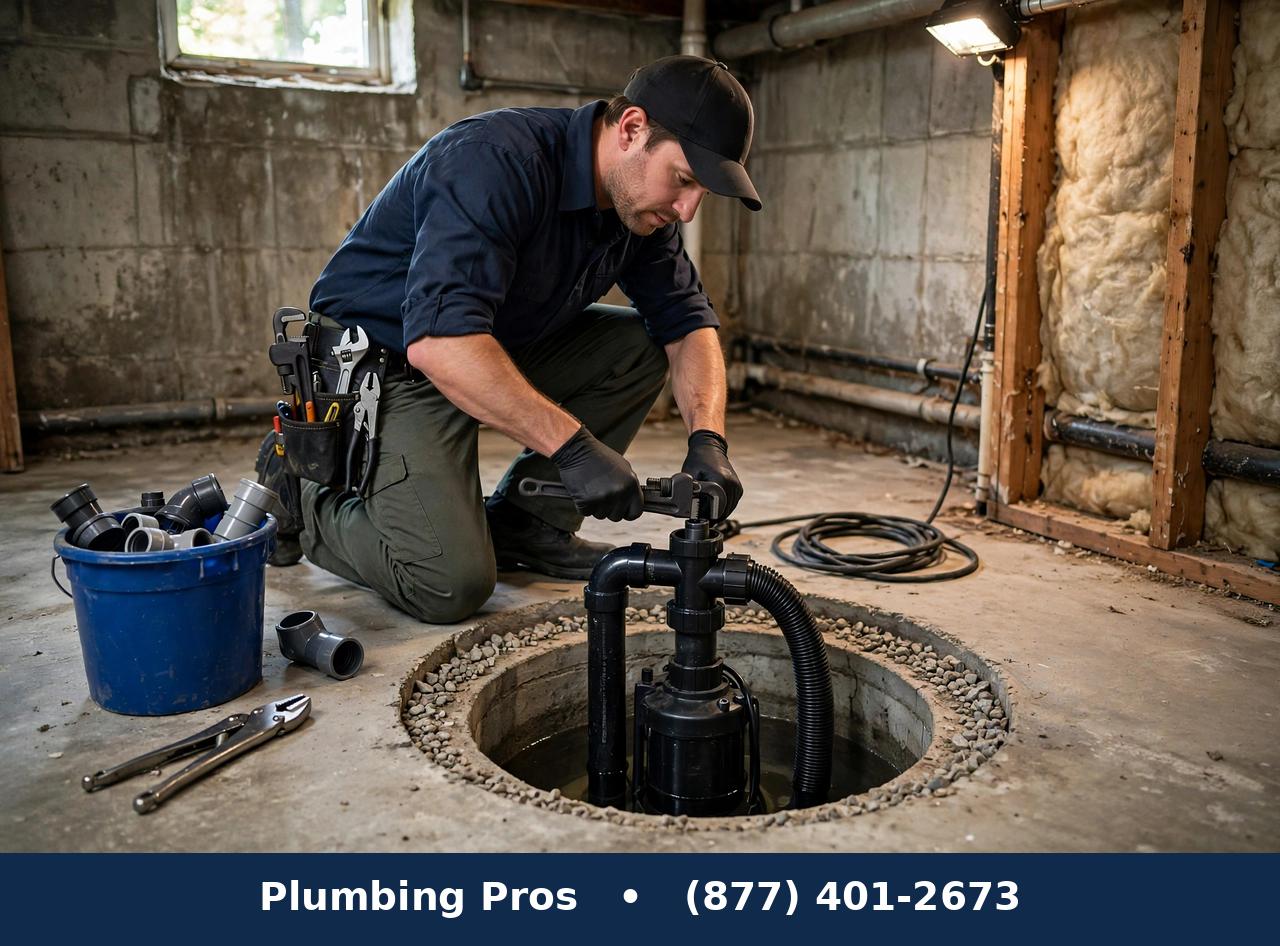
A sump pump installation is a complete water-removal system for a basement or crawlspace. It has a pit at the lowest point and a pump inside the pit. A check valve sits on the discharge line, and piping carries water to a point far from the house. When groundwater rises into the pit, a float switch turns the pump on, the pump lifts the water out, and the pump shuts off when the pit empties.
It handles groundwater seeping toward your foundation. It does not fix roof leaks, gutter problems, or leaking pipes.
The basin matters more than most people expect. A deep, wide basin holds enough water that the pump runs in calm, full cycles instead of clicking on and off every minute, which wears a motor fast. We dig the pit to fit the basin, bed it in gravel so water flows in freely, and seal the lid tight.
That seal keeps damp air and radon out of the basement while the pump does its job. Discharge runs to daylight or another approved point well away from the foundation, because water dumped next to the house just circles back. Before we leave, we fill the pit and watch a full cycle: on, pump, off, no backflow, dry floor.
Signs your home needs one
Basement water rarely starts as a flood. It starts as a dark line where the wall meets the floor, a chalky white crust on the concrete, or a musty smell that never quite leaves. After a hard rain you may find a thin sheet of water creeping across the slab, or moisture wicking up through cracks you never noticed in dry weather. Spring thaw brings the same trouble, since melting snow saturates the soil just like rain does.
These are the signs we take seriously:
- Water marks or damp patches along the wall-floor joint
- White, powdery residue on foundation walls
- A musty or earthy smell that keeps returning
- Puddles on the floor after heavy rain or fast snowmelt
- Rust stains or a dead float on an old pump already in the pit
- Neighbors on your street running pumps through every storm
Any one of these means groundwater is reaching your foundation. A pump intercepts it before it spreads.
How the installation process works
First we walk the basement or crawlspace with you and find where water actually enters: the wall-floor joint, cracks in the slab, or the low corner that puddles first. That tells us where the pit goes, because a pit in the wrong spot collects nothing. We also note how far the discharge must run and where water can sensibly go.
Then we cut the slab and dig. The pit is sized to the basin, with a gravel bed underneath so water can flow in from the surrounding soil. The basin and pump go in next, and the discharge line goes up and out with a check valve near the pump. The line is pitched so water keeps moving away from the house. A dedicated electrical connection feeds the pump on its own circuit, so a tripped breaker elsewhere never silences it.
Last comes the wet test. We pour water into the pit, watch the float rise, listen to the pump run, and confirm the check valve holds when the pump stops. The lid goes on sealed, we show you how to test the pump each season, and you get a system that runs itself from that day on.
What affects the cost
A fresh installation costs more than swapping a dead pump into an existing pit. Digging through concrete, running discharge, and adding an electrical connection is real work. The pump itself matters too: submersible models cost more than pedestal ones, and a pump sized for heavy inflow costs more than one meant for light seepage. Battery backup adds another component and another layer of wiring.
Access changes the job as well. A clean, open basement with room to work goes quickly. A cramped crawlspace, a thick old slab, or a finished room that needs care around drywall and flooring takes longer. Distance matters too: the farther the discharge must travel to reach a safe exit point, the more pipe and labor the job needs. The only way to get an exact number is a look at your basement, so request a quote and we will price what your house actually needs.
How Plumbing Pros serves your area
We install sump pumps in homes of every age. Older houses with block foundations have always wept in spring. Newer builds sometimes sit over a water table higher than the plans assumed. Finished basements face the biggest stakes, since one flood would ruin carpet, drywall, and everything stored there.
Crawlspaces get the same care, since damp under a house feeds rot and pests long before anyone sees water. Rental properties and small buildings with below-grade space are part of the work too.
Wherever your home sits, the approach is the same: find the water's path, size the system to it, install it cleanly, and test it wet. If your basement or crawlspace takes on water when it rains, reach out and we will design a system that keeps it dry.
Features
- Pit and basin dug to match your soil and inflow
- Pump sized to real water volume, not guesswork
- Check valve fitted on every discharge line
- Discharge routed to daylight or an approved point
- Airtight basin lid that seals out damp air and debris
- Full wet test of every component before we leave
Benefits
- Dry floors and dry air after storms and thaw
- Stored boxes and finished rooms stay protected
- Less damp feeding mold and musty odors
- The pump keeps working while you sleep or are away
- Battery backup options for outage nights
- Fewer basement worries every rainy season
Frequently asked questions
How does a sump pump actually work?
Water drains into the pit, a float switch rises with the level, and the pump turns on by itself. It lifts the water through the discharge line to a point far from the house, then shuts off when the pit empties. The check valve keeps that water from sliding back down when the pump stops.
How much does sump pump installation cost?
No honest contractor prices this blind. The real drivers are your house: fresh pit or replacement, concrete thickness, pump type and size, battery backup, and how far the discharge must run. A visit to your basement is the only way to quote it accurately.
Do I need a battery backup?
Storms are the main cause of both basement flooding and power outages, so the nights your pump matters most are the nights the grid is likeliest to fail. A battery backup keeps the system pumping through an outage, which is why we recommend one in areas with heavy storm seasons.
Should I get a submersible or pedestal pump?
Submersible pumps sit in the water, run quieter, and handle heavier inflow, which makes them the right pick for most homes. Pedestal pumps keep the motor above the pit, which makes service easier but limits capacity in deep or wet pits. We recommend based on your pit depth and water volume.
Can I install a sump pump myself?
A handy homeowner can set a replacement pump in an existing pit, but a full installation means cutting concrete, digging a pit, running discharge, and wiring a dedicated circuit. Mistakes there flood basements, so most homeowners get a better result having it done right the first time.
Where does the pumped water go?
To daylight or another approved drainage point well away from the foundation, never back toward the house. The exact point depends on your lot, local rules, and where water can go without bothering a neighbor's property.