Sump Pump Repair & Maintenance Near Me
Starting price: Call for pricing
Plumbing Pros repairs failing sump pumps and keeps healthy ones running strong with thorough maintenance visits. We find the real cause: stuck floats, bad check valves, clogged intakes, worn impellers, or electrical faults. Then we test the whole system under load so your basement stays dry.
What sump pump repair and maintenance is
Sump pump repair fixes the parts that stop a pump from moving water: the float switch, check valve, intake screen, impeller, or power connection. Maintenance is the scheduled checkup that catches those faults early. We clean the pit, test the float through full on/off cycles, confirm the discharge line flows freely, and check alarms and backup power. Together they make sure the pump starts every time water rises.
This service covers the pump and everything attached to it: the basin, the float, the check valve, the discharge line running outside, the alarm, and any battery backup. It does not cover the bigger water problems around the house. Water coming through foundation walls or floor areas the pit never sees points to grading, gutters, or waterproofing — different work, and we will say so honestly.
When you need it
Get the pump looked at when it behaves differently than it used to: constant running, short-cycling, humming without moving water, or grinding noises. A pump that sits silent while the pit fills is the biggest red flag.
- Constant running, even in dry weather — often a stuck float or a check valve letting discharged water fall back into the pit.
- Short-cycling, on and off every minute — usually a float tangled in its cord or a pit too small for the inflow.
- Humming without moving water — typically a clogged intake screen or a worn impeller.
- Grinding or rattling — debris in the chamber or bearings wearing out.
- A pump that does not start when the pit fills — test it yourself with a bucket of water before the rainy season.
- Rust or corrosion visible on the pump, switch, or cord.
- A breaker or GFCI that trips when the pump tries to run.
- The water alarm sounding with no obvious cause.
- A discharge line that drips, drains back into the pit, or froze over last winter.
Certain moments deserve a checkup: after a long outage, after moving into a house with a pump you have never seen run, or before the wettest stretch of the year.
How the process works
A visit starts with your description of what is happening. Then comes a full hands-on check of the pit, pump, float, valve, discharge, and power. We run the pump through complete cycles under a real load, fix what is fixable on the spot, and finish with a final test plus written notes.
- Tell us the symptom — or simply schedule a checkup. You do not need a diagnosis on your end.
- We inspect the pit, pump, float switch, check valve, discharge line, and power connection, looking for the actual cause rather than guessing.
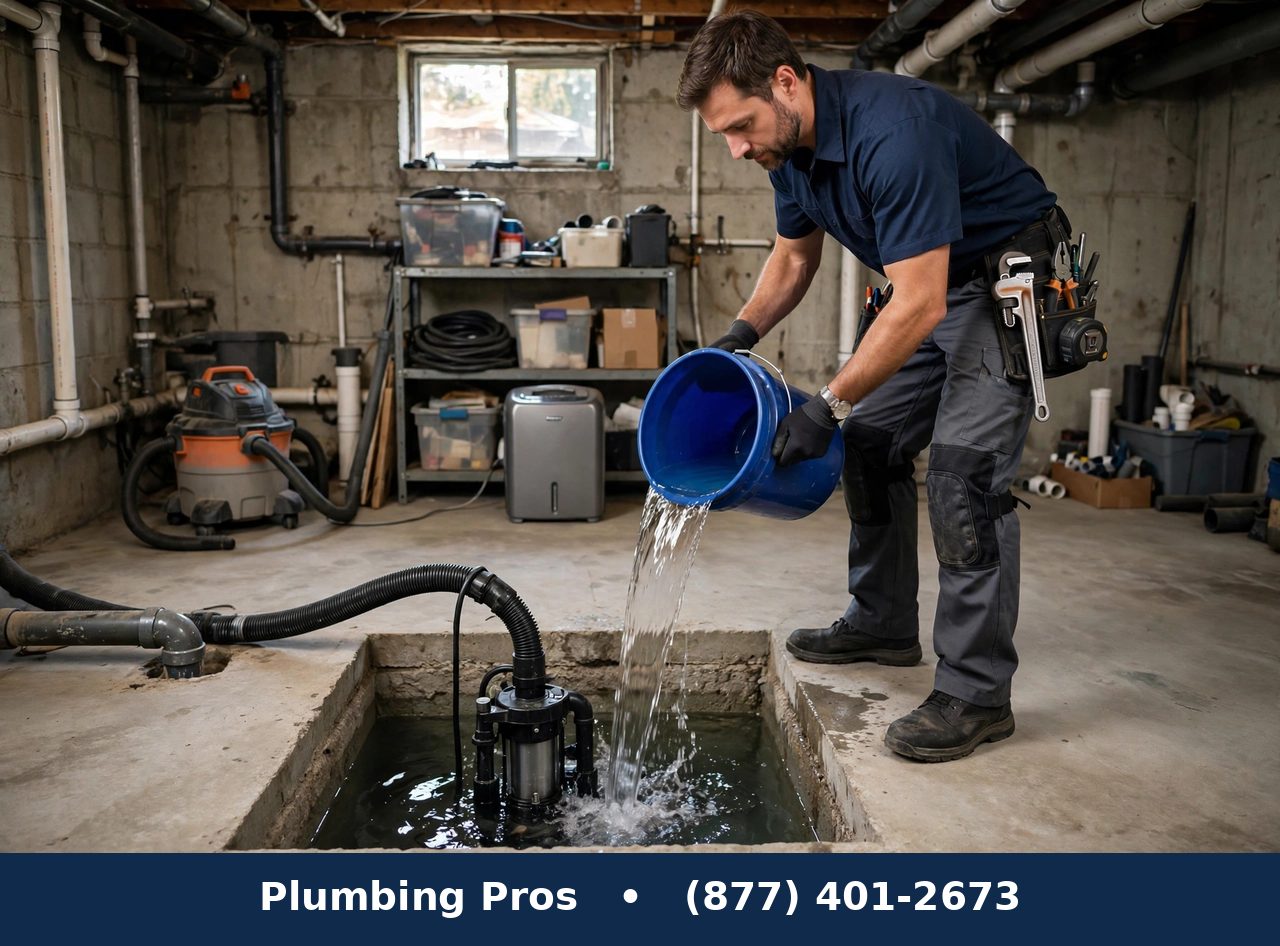
- We add water to the pit and watch full cycles: float rises, pump starts, water drops, pump shuts off.
- Repairs and small part swaps happen on the spot whenever possible.
- We test again after the work, check the alarm and backup, and leave plain notes on what we found, what we did, and what to watch next.
What affects the cost
Sump pump jobs are priced by what is actually wrong, how hard the pit is to reach, and whether the fix is a small part or bigger work. A float-switch swap in an open basement is the easy end; a buried discharge line or full pump replacement is the harder end. Either way, the honest price starts with a look, then a quote.
- The fault itself. Switches, cords, and intake cleanings are small jobs; motor and impeller work is bigger.
- Access. An open basement pit takes less time than one tucked under stairs or inside a tight crawl space.
- Parts. Common switches and valves are straightforward; older or unusual pump models can need harder-to-find components.
- The discharge line. Clearing a simple blockage is quick; rerouting a buried or poorly graded line is not.
- Timing. A planned maintenance visit runs calmer than storm-driven urgent work — one more reason to service the pump before the wet season.
- Repair vs. replace. When wear is far along and repairs keep stacking up, a new pump can be the smarter spend. We lay out both options and let you decide.
How to keep your pump healthy between visits
Between visits, a few simple habits keep a sump pump ready. Pour a bucket of water into the pit now and then to confirm the float rises and the pump drains it. Keep the pit free of debris, and keep the outside outlet clear of mulch, leaves, and ice.
- Run the bucket test a few times a year, especially ahead of heavy-rain months.
- Keep the float cord untangled and the pit clear of stored items that could jam the float.
- Walk outside and check the discharge outlet. It should be clear and draining away from the foundation.
- Listen to the pump when it runs. A change in sound is usually the first clue that something is wearing.
- If you have a battery backup, glance at its indicator now and then to confirm it still shows a full charge.
How we serve your area
Plumbing Pros serves homeowners and small businesses with basements and crawl spaces — the houses where spring rain, summer downpours, and snowmelt push groundwater up. We work on the common residential setups: pedestal and submersible pumps, standard basins, alarms, and battery backups. When you are ready, reach out — you will hear the next steps in plain language, not a sales pitch.
Features
- Float-switch testing through full on/off pump cycles
- Check valve inspection and discharge line flow checks
- Pit cleaning with intake and impeller debris removal
- Battery backup and water alarm testing
- Float, valve, and cord repairs for electrical faults
- Written findings after every visit with clear next steps
Benefits
- Catch small faults before the next heavy rain turns them into flooding
- Fewer surprise breakdowns in the middle of storms
- A pump that moves water at full strength when it counts
- Honest repair-vs-replace guidance based on real wear
- Less water damage risk to floors, walls, and stored belongings
- Confidence that the alarm and backup actually work
Frequently asked questions
How can I tell if my sump pump is working?
Pour a bucket of water into the pit. The float should rise, the pump should kick on and drain the pit, then shut off when the water drops. If anything in that chain fails, the pump needs service.
Why does my sump pump run all the time?
Usually a float switch stuck in the on position, or a failed check valve letting discharged water fall back into the pit. In both cases the pump keeps re-pumping the same water.
How often should a sump pump be serviced?
A yearly checkup is the right rhythm for most homes, scheduled before the wettest months. Book it more often if the pit collects a lot of sediment or the pump cycles constantly — heavy use wears parts faster.
Can a sump pump be repaired, or does it need to be replaced?
Most failures — bad floats, stuck valves, clogged intakes, frayed cords — are straightforward repairs. If the same pump keeps breaking down despite recent repairs, starting fresh usually costs less over time than fixing it again. We explain which situation you are in before any work starts.
What affects the cost of sump pump repair?
The fault, access to the pit, parts needed, the condition of the discharge line, and whether it is planned maintenance or storm-driven urgent work. Ask for a clear quote after an inspection — any honest price starts with a look at the actual pump.
Will my sump pump work during a power outage?
Not by itself — the main pump needs electricity. If outages are common where you live, a battery backup or water-powered backup keeps the pit draining when the power is out. Test the backup on a schedule, the same as the pump itself.