
Tank Water Heater Installation Near Me
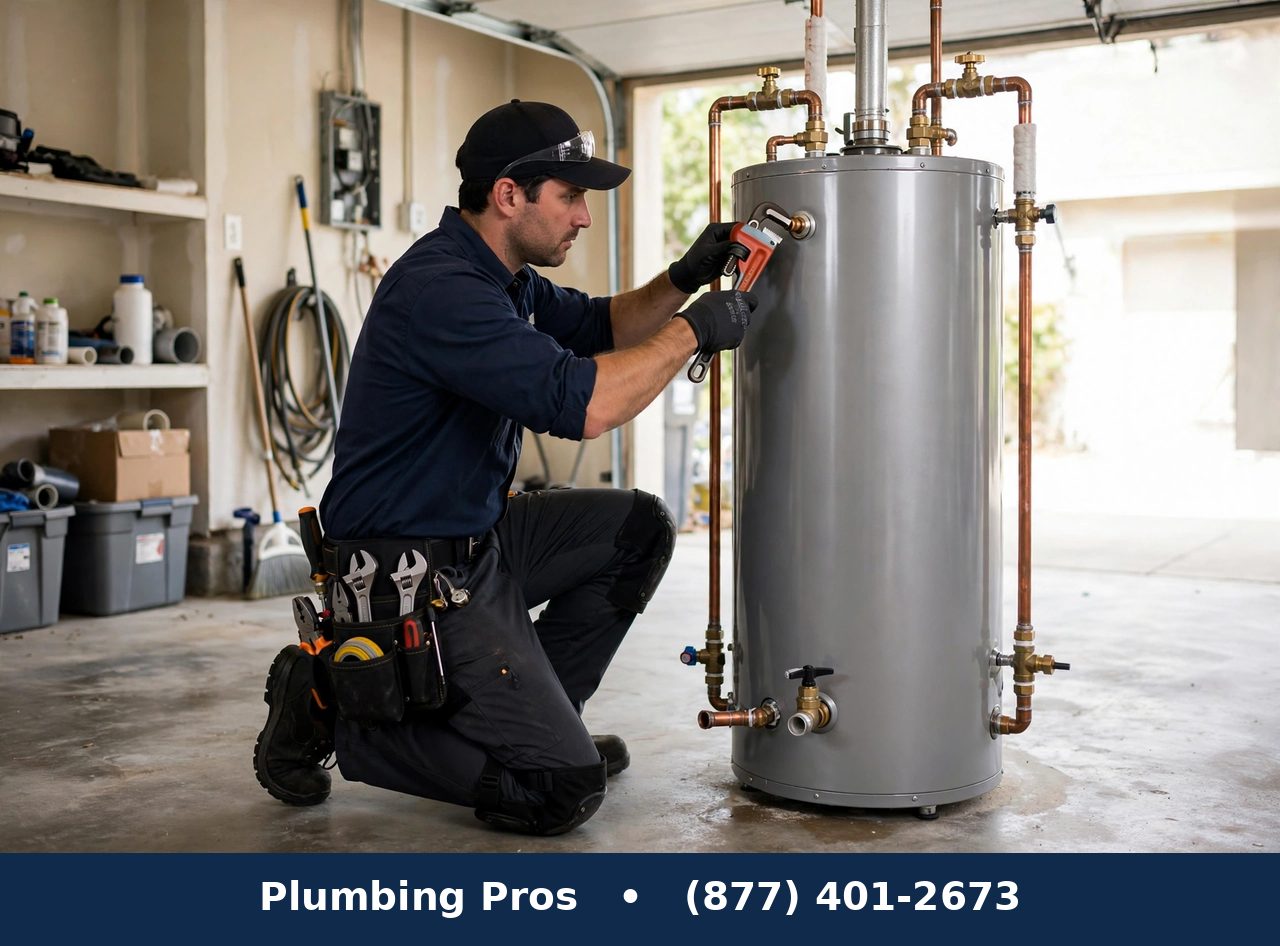
Starting price: Call for pricing
A tank water heater installation replaces your old storage tank with a new gas or electric unit sized for your home's hot water use. Plumbing Pros handles removal of the old unit, code-compliant hookup, venting, and testing — so you get steady hot water without the guesswork.
What a tank water heater installation includes
The job starts by removing the old storage tank and connecting a new one to your home's water, fuel, and venting systems. It includes sizing the new tank, making code-compliant gas or electrical connections, adding safety devices like the temperature-and-pressure relief valve, and testing the finished setup.
This service covers the water heater itself — not your home's wider plumbing. It does not include re-piping the house, replacing faucets, or converting to a tankless system. Those are separate jobs with their own steps.
The goal is simple: a tank that heats water safely, meets code, and matches your demand. Every connection is checked before the job is called done.
When your tank needs replacing
You likely need a new tank when the old one leaks from the tank body or rust-colored water appears at hot taps. A unit that rumbles with sediment it cannot flush away is another signal, as is hot water running out much sooner than it used to. Those are replacement signals — a repair rarely buys much time once they show up.
- Water under or around the tank. A leak from the tank body itself cannot be repaired. Catch it early to avoid damage to floors and walls.
- Rusty or discolored hot water. Rust inside the tank means the steel is breaking down. If the cold water runs clear, the tank is the problem.
- Rumbling or popping noises. Sediment bakes onto the bottom of the tank and traps heat. The noise is steam forcing its way through the layer.
- Hot water runs out fast. A failing burner, weak elements, or heavy sediment can cut the usable hot water in half.
- An aging tank with symptoms. Older units that show any of the above are strong replacement candidates. Planning the swap beats reacting to a leak.
Choosing the right tank size and fuel type
Pick size by your household's busiest hour of hot water use and fuel by what your home already has. A family running back-to-back showers needs more stored water and faster recovery than a smaller household with staggered routines. Gas tanks recover faster where gas service exists, while electric tanks are simpler to vent.
Size is about gallons and recovery together. A bigger tank with slow recovery can still run short during a busy morning. Both get matched to how your home actually uses hot water.
Fuel usually follows the hookups in place. Gas needs a proper flue with correct clearances and materials. Electric needs an adequate circuit and breaker size. Switching fuels can mean new lines or venting, which changes the scope of the job.
How the installation works
The visit follows the same order each time. You know what is happening and when.
- Look-over and confirmation. The space, fuel supply, venting, and drain options are checked. The new tank's size and model are confirmed before work starts.
- Shutoff and drain. Gas or power is shut off and the water supply is closed. The old tank is drained into a floor drain or through a hose.
- Old tank out. Connections are disconnected and the unit is removed. Haul-away is included, so nothing is left behind for you to move.
- New tank set and connected. The new unit is leveled, then hooked to water lines, fuel, and venting. An expansion tank is added where required, and the temperature-and-pressure relief valve gets a proper discharge line.
- Fill and test. The tank fills, air is purged from the lines, and the burner or elements are fired. Temperature is set to a safe level and every connection is checked for leaks.
- Walkthrough. You are shown the shutoff valves, the temperature setting, and basic upkeep like flushing sediment.
What affects the cost
Several factors shape the final number. Tank size and fuel type are the first two — larger tanks and higher-recovery models cost more than basic ones. Where the tank sits matters too; a tight closet or basement with no drain access takes more labor than an open garage corner.
Code updates can change the scope. Older installs may need a new vent run, an expansion tank, a drain pan with a drain line, or updated shutoff valves. The condition of the existing connections matters as well — corroded pipes or an undersized gas line add work before the new tank can go in.
Timing and permits play a part. A scheduled replacement during a normal visit is simpler than an emergency swap after a leak. Some areas require a permit and inspection, which adds a step to the job. An exact quote comes from looking at your space, fuel, and venting — the details any installer needs before naming a number.
How Plumbing Pros serves your area
Plumbing Pros installs tank water heaters in homes and small businesses across the service area. Single-family homes make up most of the work, from newer builds getting their first replacement to older homes whose venting and connections need updating to current code.
Rental properties and small offices are handled too. Anywhere hot water matters — kitchens, bathrooms, laundry rooms — the same steps apply: right size, right fuel, code-compliant connections, and a full test before the job is done. When you are ready for a new tank, Plumbing Pros can handle the sizing, the install, and the testing.
Features
- Gas and electric tank units installed
- Tank sizing based on your household's hot water demand
- Removal and haul-away of the old unit
- Code-compliant water, gas, and electrical connections
- Proper venting and draft-checked flue setup
- Temperature-and-pressure relief valve and discharge line
- Final testing of temperature, pressure, and operation
Benefits
- Hot water capacity matched to your home's real routines
- Connections that meet local plumbing code
- No disposal hassle — the old unit leaves with us
- Combustion gases vented safely outdoors
- Leak-checked water, gas, and vent lines before sign-off
- Clear walkthrough of shutoffs and temperature settings
Frequently asked questions
How long does a tank water heater installation take?
Most like-for-like swaps take a few hours from shutoff to tested and running. Jobs that need new venting, gas line work, or code updates can run longer.
Should I replace my water heater before it fails?
If the tank is aging and showing early signs like rusty water or slow recovery, replacing it on your schedule beats a sudden leak. A planned swap also gives you time to pick the right size and fuel.
Gas or electric — which tank should I choose?
Gas tanks recover faster and often cost less to run where gas service is available, but they need proper venting. Electric tanks are simpler to install and work anywhere with adequate wiring. Most homes stick with the fuel they already have.
What size tank does my home need?
It depends on your household's busiest hour of hot water use, not just the number of people. Back-to-back showers, laundry, and dishwashing at the same time call for more storage and faster recovery.
Why does my new water heater need an expansion tank?
Heated water expands, and in a closed plumbing system that extra pressure has nowhere to go. An expansion tank absorbs it and protects the tank, pipes, and valves. Many local codes require one on new installs.
What affects the cost of a tank water heater installation?
Tank size and fuel type, how easy the location is to work in, any code updates like venting or an expansion tank, and whether permits are needed. Send in your details for an exact quote.