Tankless Water Heater Installation Near Me
Starting price: Call for pricing
When the morning showers turn cold, the tank has run out — a tankless water heater solves that by heating water only the moment a tap opens. Plumbing Pros sizes, installs, and vents gas and electric tankless units for homes and small businesses. Every install includes isolation valves for easy future descaling and a full walkthrough of your new system.
What tankless water heater installation is
A tankless water heater heats water only when you need it. Cold water flows into the unit when a hot tap opens. A flow sensor detects the movement, and a gas burner or electric element heats the water as it passes through a heat exchanger. When the tap closes, the unit shuts down. There is no storage tank, so there is no stored supply to exhaust.
A tankless installation covers more than hanging the unit on the wall. It starts with sizing — matching the unit to your home's simultaneous demand. Then comes the fuel: a correctly sized gas line for gas units, or the right electrical circuit for electric models. We route venting safely to the outside, set the temperature control, and fit isolation valves so the unit can be flushed of mineral buildup later. You get a walkthrough before we leave, so you know how the controls work.
Tankless is not the answer for every home. Very low demand can leave some units short-cycling. A home with no path for safe venting, or an electrical panel with no room to grow, may do better with a high-efficiency tank. We say so when the math says so. Our job is hot water that fits your home, not a particular box on the wall.
When you need it
- Your household outgrew its tank: showers go lukewarm, and the last person in line suffers.
- You added a soaking tub, a body-spray shower, or a second laundry load that the old tank cannot feed.
- The tank is failing — rust, leaks, or strange noises — and you are choosing a replacement anyway.
- You want the floor space back that a bulky storage tank occupies.
- Energy bills bother you, since a tank keeps water hot all day whether anyone uses it or not.
- You are remodeling and would rather plan the hot water system than inherit an old tank's limits.
How the process works
First, we talk through your household: how many showers, faucets, and appliances might draw hot water during the busiest hour. Incoming water temperature matters too, since cold groundwater demands a bigger temperature lift. That calculation sets the unit size and whether gas or electric fits better.
Next comes the site check. We look at where the unit will mount, how venting can reach the outside, and what the gas line or electrical panel can support. If upgrades are needed, you hear exactly what and why before any work starts.
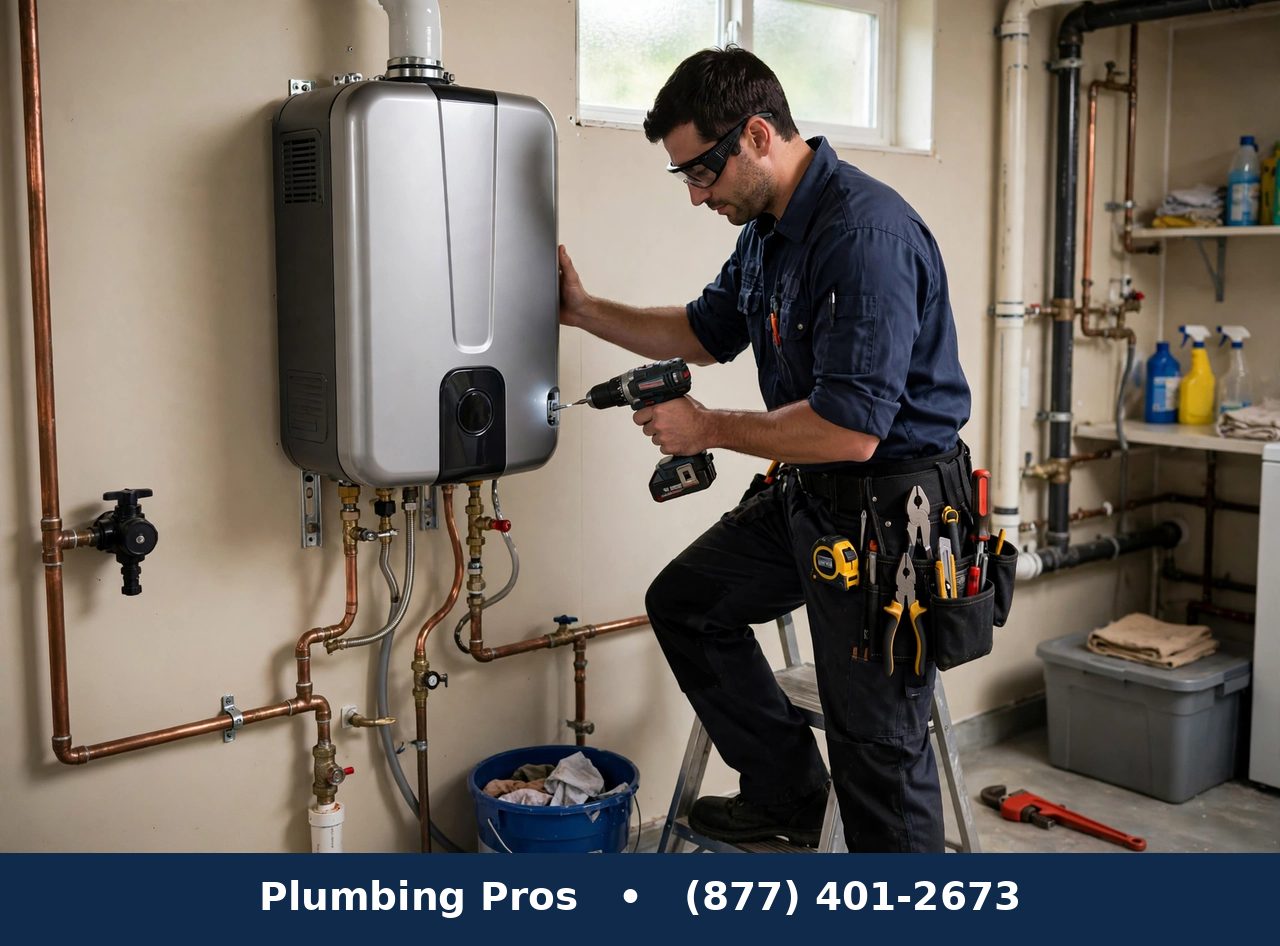
On install day, we disconnect and haul away the old equipment, mount the tankless unit, run venting, connect gas or electric, and tie into your water lines with isolation valves. We fill and purge the system, set the temperature to a safe level, test every fixture, and walk you through the controls.
What affects the cost
The unit itself is one piece. Size, fuel type, and features like built-in recirculation all shape the equipment side of the job. Then comes the labor: how far venting must run, whether the gas line needs upsizing, and what the electrical panel requires for an electric model.
Conversion jobs add their own variables. Removing a heavy old tank from a tight basement takes more effort than swapping one in a garage. Permits and local code requirements enter the picture, since plumbing work is inspected in most areas. Water quality matters as well — hard water may call for a pre-filter to protect the heat exchanger.
None of this is a number until someone sees your home. We quote each job after the sizing and site check, so the figure you get matches the work your house actually needs.
How we serve your area
Plumbing Pros installs tankless water heaters for single-family homes, townhouses, condos, and small commercial spaces across the country. Whether your home runs on natural gas or propane, or your panel can support a big electric unit, we size the system to your real demand instead of guessing.
Replacement jobs get the old tank removed and recycled properly. New-build and remodel projects get coordinated with your contractor so the hot water system is ready when the walls go up. And every install leaves you with isolation valves, clear instructions, and a system tested at every fixture.
If your showers keep going cold, start with a conversation. Tell us about your household, and we will tell you honestly whether tankless is your fix.
Features
- Whole-home sizing based on simultaneous hot-water demand
- Gas and electric tankless unit installation
- Venting and exhaust routed safely through the structure
- Gas line sizing and upgrades when your home needs them
- Isolation valves on every unit for easy future descaling
- Optional recirculation pumps for faster hot water at distant taps
- Tank-to-tankless conversions replacing old storage systems
Benefits
- Endless hot water — the last shower runs as hot as the first
- Less wasted energy, since water heats only when a tap opens
- Reclaims the floor space a bulky tank once occupied
- A longer working life than most conventional tanks with routine care
- A quiet unit that fires up only when hot water is called for
- Potential eligibility for local utility rebates on qualifying high-efficiency models
Frequently asked questions
How does a tankless water heater actually work?
It heats water at the moment of use, not ahead of time. When you open a tap, the unit fires and brings cold water up to temperature as it passes through. There is no tank to fill or reheat, so the supply keeps up with demand.
Will I ever run out of hot water with a tankless unit?
Not if it is sized correctly. Because a tankless unit heats water on demand instead of drawing from a stored supply, showers stay hot as long as water flows. Sizing by simultaneous demand is the key step.
Should I choose a gas or an electric tankless water heater?
Gas units generally handle larger households because they heat faster, while electric units suit smaller homes and avoid venting work. Electric models may need a panel upgrade, since they draw a lot of power. We size both and recommend the honest fit for your home.
How much does tankless water heater installation cost?
No two jobs cost the same. The unit size, gas or electric, venting length, gas line or electrical upgrades, water quality, and how hard your old equipment is to remove all move the total. Call the number in the page header and we will size the job and quote it exactly.
How long does a tankless installation take?
Most straightforward tankless installs are finished in a single visit. Conversions that need new gas lines, longer vent runs, or panel work can take longer.
What maintenance does a tankless water heater need?
A yearly descaling flush keeps mineral buildup from choking the heat exchanger, and the inlet filter screen should be cleaned at the same time. Every unit we install gets isolation valves, which makes that flush a simple job instead of a project.