
Toilet Installation & Replacement Near Me
Starting price: Call for pricing
A cracked tank, a rocking base, or a tired flush can all mean it's time for a new toilet. Plumbing Pros installs and replaces toilets of every common style — measuring the rough-in, repairing the flange when needed, and setting the new unit on a fresh seal. Every connection gets tested before the job is done, so your new toilet works the way it should from the first flush.
What toilet installation and replacement is
Toilet installation is the complete removal of your old toilet and the fitting of a new one onto your existing drain and water lines. It covers measuring the rough-in, checking the closet flange, setting a new seal, and reconnecting the supply. It does not include moving the drain to a new location — that is rough plumbing for a remodel and a different job entirely.
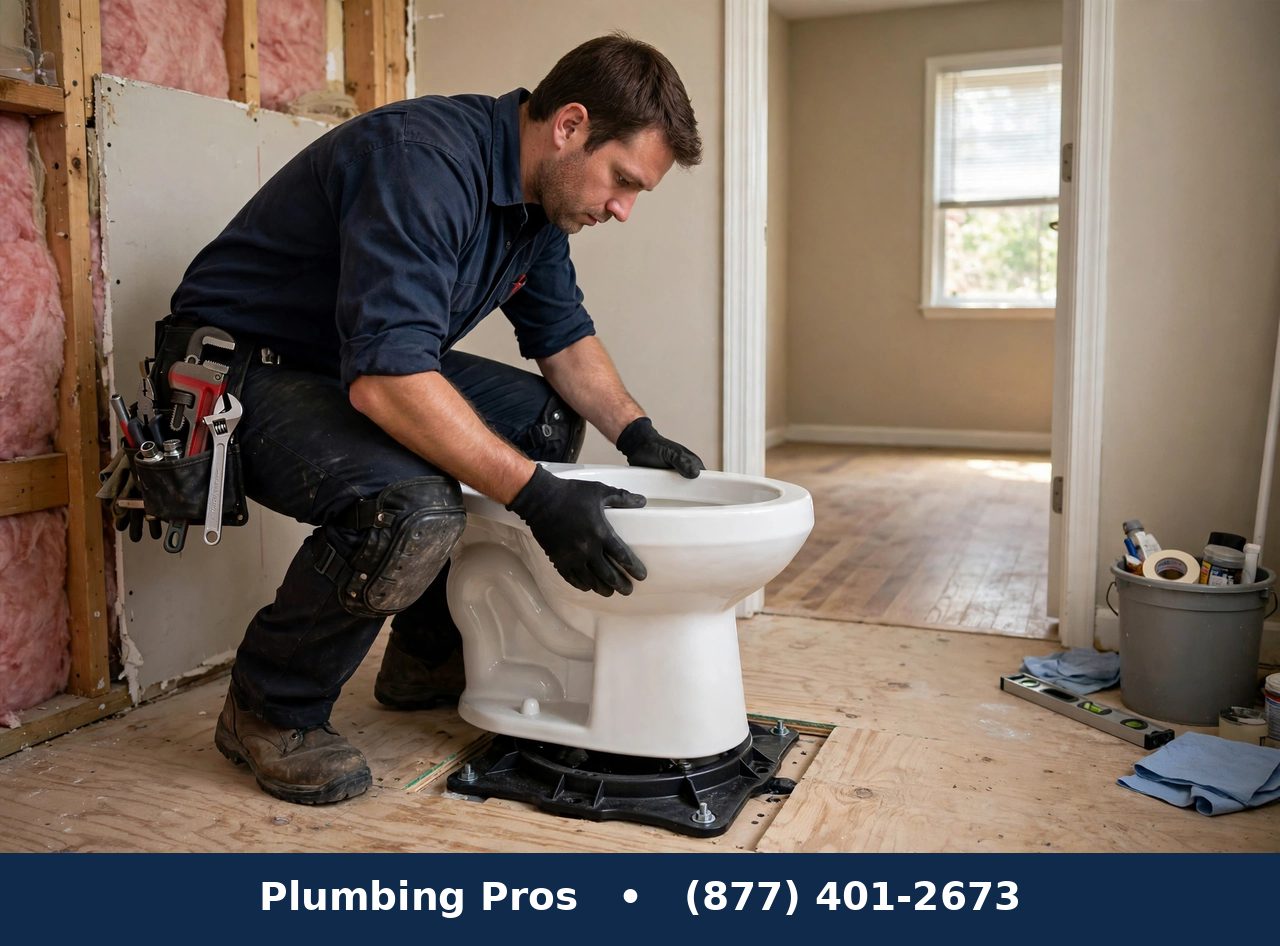
A proper installation starts underneath. The closet flange is the ring that anchors the toilet to the floor and connects it to the drain pipe. If it sits too high, too low, or cracked, the toilet will rock and the seal will fail. That is why a careful plumber checks the flange before setting anything. The supply line and shut-off valve get the same attention. A valve that has not been turned in a long time may refuse to close when you need it most.
When you need it
Some toilets are worth fixing. Others are telling you plainly it is time for a new one.
- Hairline cracks in the tank or bowl that weep a little water
- A base that rocks or lifts no matter how the bolts are tightened
- Constant running or weak flushes even after the internal parts were replaced
- Porcelain that is deeply stained, crazed, or simply past its prime
- A remodel where the old unit no longer fits the room
- Internal parts that are no longer made for your model
A rocking base deserves special attention. It often means the flange has failed or the floor underneath has softened from a slow leak. Setting a new toilet on that damage without fixing it first just repeats the problem.
How the process works
First comes the assessment. The water is shut off, the tank and bowl are drained, and the rough-in is measured. Then the old toilet is lifted off, the old seal is scraped clean, and the drain is covered so nothing falls in and sewer gas stays out.
Next is the work you cannot see. The flange is repaired or replaced as needed. The shut-off valve and supply line are checked and swapped if they are corroded or frozen. Then the new seal goes down, the toilet is set and leveled, and the bolts are tightened evenly. Over-tightening is a classic mistake — porcelain cracks under too much force.
Finally, the testing. The supply line is connected and the tank fills. Then come repeated flushes while watching the refill, the shutoff, and the base for any sign of seepage. Every connection gets a tissue-dry check. The base is caulked with the back left open, so a future leak shows itself instead of hiding.
Choosing the right new toilet
The critical measurement is the rough-in: wall to closet-bolt center. Most homes use a 12-inch rough-in. Older houses sometimes wander from the standard, and the wrong rough-in leaves an awkward gap behind the tank or a toilet jutting into the room. Measure before you buy anything.
Bowl shape matters too. Elongated bowls add sitting comfort but need more floor space. Round bowls suit tight powder rooms. Taller seat heights help older household members sit and stand with less effort. Look for a fully glazed trapway — smooth, generously sized passages clog far less than rough, narrow ones. Modern low-flow designs flush well while using less water, so a new toilet often pays back a little on every bill.
What affects the cost
Whether you supply the toilet or the plumber does is the first fork in the road. One-piece, two-piece, and wall-hung designs involve different amounts of labor. A rough-in that does not match standard spacing may need an offset flange or flange repair. A corroded shut-off valve or supply line adds parts and time.
What is found underneath matters as well. A soft subfloor from an old leak has to be dealt with before the new toilet goes down. Haul-away of the old unit and add-ons like a bidet seat change the scope too. Every bathroom is different, so the honest answer is a quote based on your setup. Describe what you have and what you want, and you will know the number before work starts.
How we serve your area
Plumbing Pros installs and replaces toilets for homes and small businesses across the area — single-family houses, rentals, offices, and restaurants. Common calls include property turnovers between tenants, the finishing touch on a bathroom remodel, and that one guest bathroom everyone avoids because the toilet runs all day. Describe what your toilet is doing, and you will hear the next steps before any work starts.
Features
- Rough-in measurement and correct toilet sizing for your drain
- Closet flange inspection, repair, or replacement
- Fresh wax ring or wax-free seal with every installation
- Supply line and shut-off valve check
- Old toilet removal and haul-away
- Multi-point leak and flush testing
Benefits
- A toilet that sits flat and never rocks
- Stronger, cleaner flushes with less double-flushing
- No slow leaks rotting the floor underneath
- Modern designs that use less water per flush
- Quieter refills and smoother day-to-day operation
- A bathroom that looks and feels up to date
Frequently asked questions
Should I repair my toilet or replace it?
If the porcelain is cracked, the base rocks on a damaged flange, or parts are no longer made for your model, replacement is the honest answer. If the trouble is a worn flapper or fill valve, a repair is usually the sensible move. A plumber can tell you which one you are looking at in a single visit.
Can I install a toilet myself?
A straightforward swap is within reach for a handy homeowner. But flange damage, a leak at the base, or a mismatched rough-in turn it into a plumber's job fast. A badly set toilet can leak silently into the subfloor for months before you notice.
How long does a toilet replacement take?
Most straightforward replacements are finished in one visit, often within a couple of hours. Flange repair or subfloor damage underneath adds time, which is why the assessment step matters.
What is a rough-in measurement?
It is the distance from the finished wall to the center of the closet bolts that hold the toilet down. Most toilets are made for a 12-inch rough-in. Measure yours before buying a new unit so the tank sits flush against the wall.
Do you take the old toilet away?
Yes. Removal and haul-away of the old toilet is part of the service, so you are not left figuring out how to dispose of a heavy porcelain fixture.
How much does toilet installation cost?
It depends on who supplies the toilet, the style you choose, the condition of the flange and shut-off valve, and extras like haul-away or a bidet seat. Because every bathroom differs, ask for a quote based on your setup rather than a generic number.