Trenchless Sewer Repair Near Me
Starting price: Call for pricing
Trenchless sewer repair fixes a cracked, root-filled, or corroded sewer line without digging up your yard. Our plumbers work through small access points to reline the pipe from the inside or pull a brand-new pipe through the old one. Most households are back to full service quickly, with driveways, patios, and landscaping left untouched.
What trenchless sewer repair is
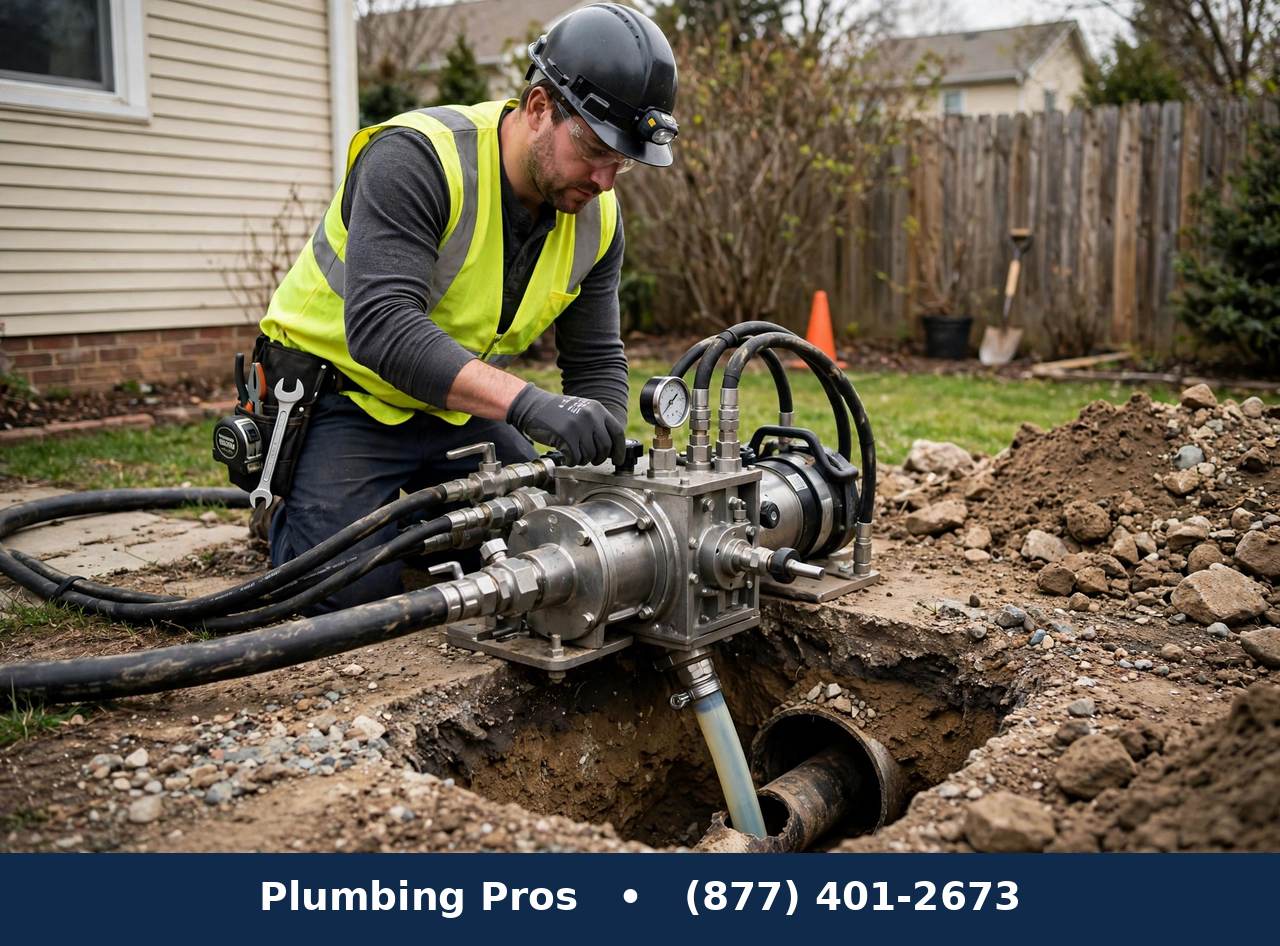
A damaged sewer line can be repaired without digging a trench along its full length. A plumber works through small access points, usually an existing cleanout or two small pits, and repairs the pipe from the inside. The two main methods are pipe lining and pipe bursting. Lining cures a resin-coated liner inside the old pipe, while bursting fractures the old pipe apart as it pulls a new one through.
Pipe lining is best when the old pipe still holds its basic shape. A flexible liner saturated with epoxy resin is pulled into place, inflated tight against the old walls, and hardened with heat or UV light. What cures is a smooth, jointless new pipe formed inside the original.
Pipe bursting is the answer when the old line is too far gone to hold a liner. A cone-shaped bursting head breaks the old pipe outward into the surrounding soil while a new high-density polyethylene line follows right behind it on the same pass. The new pipe keeps its full diameter, which matters for heavy household use.
Trenchless work is not right for every line. Fully collapsed sections, severe offsets, lines running backward against the proper grade, and pipes with wide separations pouring in groundwater usually need open excavation. The camera inspection tells us which category your line falls into, and we recommend only the method the footage supports.
When you need trenchless sewer repair
The warning signs of a failing sewer line show up inside the house before anyone thinks about the pipe in the yard. Watch for these:
- Multiple fixtures draining slowly at the same time, not just one sink
- Toilets or drains that gurgle when water runs elsewhere
- Sewage odors inside the home or over the yard
- Water or waste backing up into tubs and floor drains
- Green, soggy, or sunken patches along the line's path
- Clogs that keep returning after they are cleared
One of these can be an ordinary clog. Several at once more often mean the line itself is damaged, and the damage usually gets worse the longer it sits. A camera inspection confirms the cause and whether the pipe qualifies for a trenchless method. We scope the full run, measure diameter and length, and show you what the camera finds before any repair work is scheduled.
How the trenchless repair process works
Everything starts with the camera. The scope maps the damage, pinpoints exactly where it sits along the run, and tells us which method the pipe can support.
- Inspection and measurement: the full line is scoped and measured so the liner or bursting head matches the run exactly.
- Line cleaning: roots and buildup are cleared with hydro jetting so the equipment travels through a clean pipe.
- Access points: we use your existing cleanout when one is available, or open one or two small pits at the ends of the run.
- Pipe lining: the resin-saturated liner is pulled into place, inflated against the old walls, and cured into a hard new pipe.
- Pipe bursting: the bursting head fractures the old line outward while the new pipe is pulled through behind it.
- Final check: the finished line is scoped again to confirm a clean, jointless run, then the access points are restored.
Most of the noise and equipment stays at the two access points. There is no long trench, no heavy machinery crossing the lawn, and no pile of excavated soil to haul away.
What affects the cost
No two sewer jobs cost the same because no two lines share the same conditions. The length and diameter of the run set the scale of the work. The method matters: lining and bursting use different equipment and materials. The condition of the old pipe decides how much prep is needed before the repair itself.
Access shapes the labor. A cleanout right where we need it keeps the job simple; a line buried deep under a driveway or patio with no existing access takes more setup. Soil type, heavy root growth, and local permit or inspection requirements each add their own weight. Properties with repeated backups from severe root intrusion may need extra clearing before the liner goes in.
Because the variables stack differently on every job, the honest next step is a camera inspection and an exact quote based on what your line actually needs. That way you pay for your repair, not someone else's estimate.
How we serve your area
Plumbing Pros handles trenchless sewer repair for single-family homes, rental properties, and small businesses across the areas we serve. Older homes with clay or cast iron lines, neighborhoods with mature trees pushing roots into joints, and newer builds with settled or offset sections all show up in our schedule.
We arrive with camera gear first and repair equipment second. The diagnosis comes before the recommendation, and the recommendation follows the footage. Driveways stay poured, patios stay laid, and the landscaping you paid for stays where it is. If your line turns out to be one of the few that needs excavation instead, you hear that plainly, along with what that involves.
Your sewer line runs out of sight every day, and most homeowners never think about it until it fails. When that day comes, a trenchless repair gets the line working again without turning the yard into the job site.
Features
- Cured-in-place pipe (CIPP) lining
- Pipe bursting full replacement
- High-definition sewer camera inspection
- Existing cleanout access when available
- Small-pit excavation only where needed
- Root and buildup clearing before repair
- Post-repair camera verification
Benefits
- No trench torn through your yard or driveway
- Most jobs finished in one to two days
- Smooth, jointless new pipe interior
- Stops root intrusion, cracks, and corrosion
- Less mess and cleanup after the job
- Patios, trees, and landscaping stay in place
Frequently asked questions
What is trenchless sewer repair?
It is a way to fix or replace a damaged sewer line without digging a full trench. The plumber works through small access points and either cures a resin liner inside the old pipe or pulls a new pipe through while fracturing the old one apart. The yard, driveway, and landscaping stay in place.
How do I know if my sewer line qualifies for trenchless repair?
A camera inspection decides. Trenchless methods need a pipe that still holds its basic shape, with damage like cracks, root intrusion, or corrosion. Fully collapsed sections, severe offsets, and wide separations usually need excavation, and the camera footage shows which situation you have.
How long does a trenchless sewer repair take?
Most jobs finish in one to two days once the method is chosen. Pipe lining and pipe bursting both move quickly because there is no long trench to dig and backfill. Larger or more complex runs can take longer, and your plumber can tell you what to expect after the inspection.
What is the difference between pipe lining and pipe bursting?
Pipe lining rebuilds the line from the inside by curing a resin-coated liner within the old pipe, and it slightly reduces the inside diameter. Pipe bursting replaces the line outright by fracturing the old pipe outward while pulling in a new one, keeping the full diameter. The camera inspection shows which one fits your pipe.
Will trenchless repair damage my yard or driveway?
That is the main reason homeowners choose it. Work happens through an existing cleanout or one to two small pits, so there is no trench across the lawn or driveway. The surface above the line looks the same when the job is done as it did before we arrived.
How much does trenchless sewer repair cost?
Cost depends on the length and diameter of the run, the method used, and the condition of the old pipe. Access difficulty, soil and root conditions, and local permit requirements each play a role too. A camera inspection lets us price your actual job, so ask for an exact quote based on what your line needs.