Water Heater Maintenance & Flushing Near Me
Starting price: Call for pricing
Popping or rumbling from your water heater means sediment is building up across the tank bottom. Plumbing Pros drains and flushes the tank, inspects the anode rod, and tests the relief valve and burner or elements during a scheduled maintenance visit. It is the routine care that keeps hot water quiet, efficient, and dependable.
What water heater maintenance and flushing is
Water heater maintenance is a scheduled service visit where a plumber drains the tank, flushes mineral sediment out through a hose, and inspects the anode rod that slows rust. It also includes testing safety controls such as the temperature-and-pressure relief valve. Flushing handles the buildup at the tank bottom; the rest of the visit checks the parts that keep the unit heating safely.
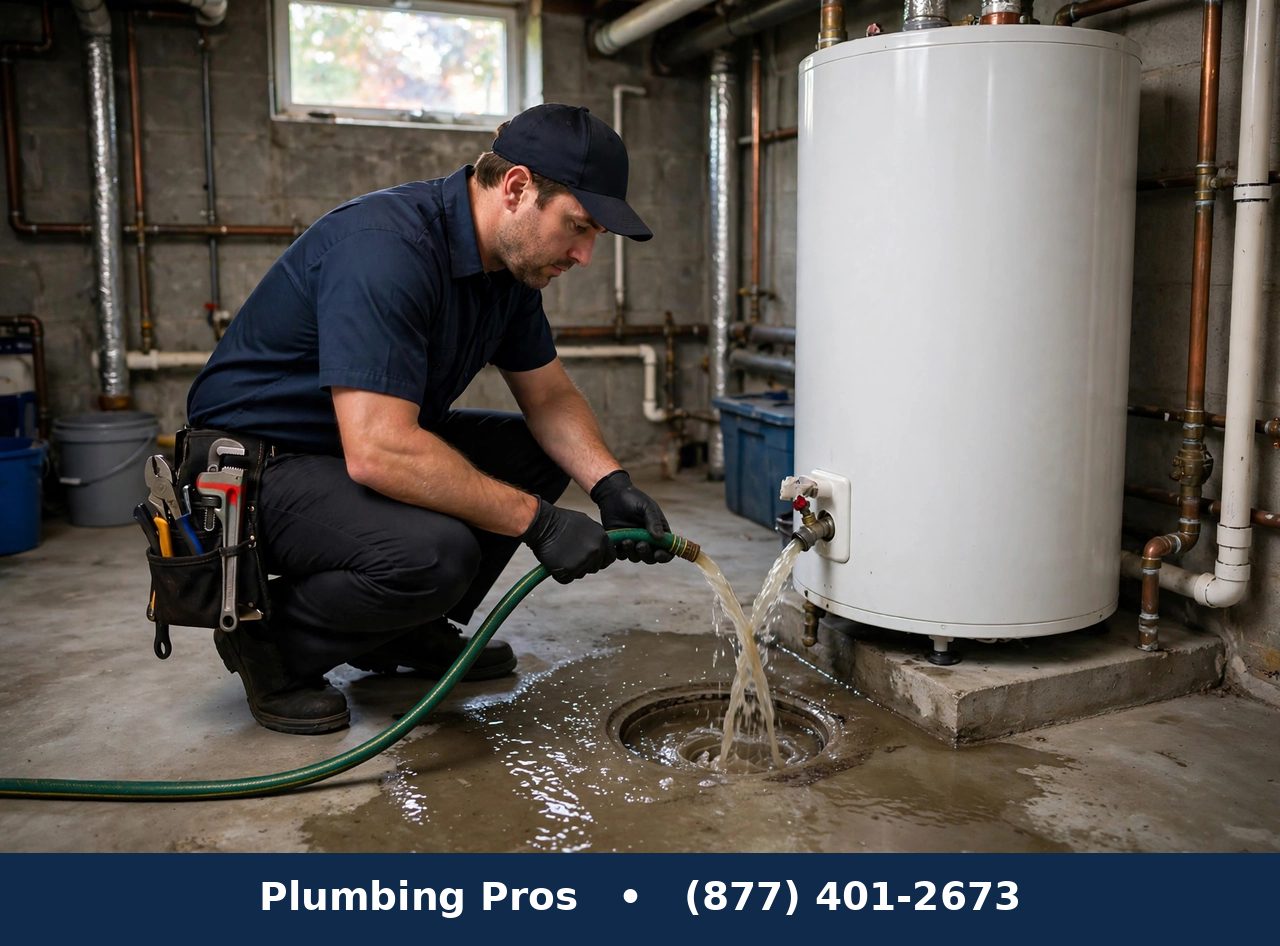
During a flush, cold water runs into the tank in bursts to stir up and carry out the settled minerals. The drain valve is cleared so future maintenance stays easy. The plumber also checks the thermostat setting and looks at the burner flame or heating elements for early signs of trouble.
What maintenance is not: it does not rebuild a failing unit. If the tank itself is leaking or the bottom is badly corroded, flushing can expose the weak spot, which is useful information rather than a fix. A visit tells you where your heater stands: healthy, due for a part, or nearing replacement.
When you need it
Most homes do well with a flush once a year, and homes with hard water or heavy hot water use may need it sooner. Between visits, the heater usually gives clear signals that sediment is getting ahead of schedule.
- Popping, rumbling, or banging sounds while the unit heats
- Hot water that runs out sooner than it used to
- Showers that start hot, then turn lukewarm
- Rusty or gritty water at hot taps only
- A drain valve that trickles or will not open fully
- A gas or electric bill climbing with no change in habits
How the process works
1. The plumber shuts off the fuel or power and lets the stored water cool to a safe temperature. 2. A hose is attached to the drain valve and run to a floor drain or outside, away from landscaping. 3. The tank drains fully, then short bursts of cold water stir the bottom and push sediment out through the hose. 4. The anode rod is pulled and checked for wear, and it is replaced when it has worn down. 5. The relief valve is lifted to confirm it opens and reseats, while the thermostat, burner or elements, and gas or venting connections are inspected. 6. The tank refills, air is bled from the lines, and the unit is restarted and watched through a full heat cycle.
What affects the cost
A flush is one of the more straightforward plumbing services, but no two visits are identical. Tank size matters, since a large tank holds more water to move than a small one. Access matters too: a heater in a tight crawlspace takes longer to service than one sitting in an open garage.
Condition matters most. A tank flushed every year drains clean in minutes, while one that has gone unserviced for a long stretch needs repeated flushing to clear. An anode rod that needs replacing adds parts to the visit. Tankless units are descaled with a pump and cleaning solution, which is a different process from a tank flush. A quick look at the unit and the water conditions is all it takes to price the visit.
How we serve your area
Plumbing Pros handles maintenance and flushing for both tank and tankless water heaters in homes and small businesses. That includes single-family homes, rental properties, restaurants, and offices with steady hot water demand.
Because the company serves a wide area, visits are grouped by route so the crew arrives with the right equipment for your unit type. The goal of every visit is simple: a quiet tank, steady hot water, and a clear picture of what your heater needs next. To set one up, reach out to Plumbing Pros and describe what your unit is doing.
Features
- Full tank drain and sediment flush
- Anode rod inspection for wear
- Temperature-and-pressure relief valve test
- Burner assembly or heating element inspection
- Thermostat setting check
- Gas connections and venting check
Benefits
- Quieter operation without popping or rumbling
- Faster hot water recovery after heavy use
- Less energy wasted heating through sediment
- Fewer surprise breakdowns and cold showers
- Longer service life for tank and tankless units
- A clear picture of your heater's condition
Frequently asked questions
How often should I flush my water heater?
Once a year works for most homes. Hard water, high usage, or a large household shortens that interval, while softened or filtered water stretches it. A plumber can set the right schedule after the first visit.
Can I flush my water heater myself?
Many homeowners drain a tank heater with a garden hose. The risks are scalding water and a seized drain valve that can snap. A professional visit adds the anode rod check, relief valve test, and burner inspection that most DIY flushes skip.
Will flushing stop the popping noise?
Usually, yes. The noise comes from water trapped under sediment flashing to steam as the tank heats. If the noise returns quickly, the anode rod or water chemistry may need attention.
What does the anode rod do?
It is a magnesium or aluminum rod that corrodes on purpose so the steel tank does not rust. Once it wears down to a thin core, the tank itself starts rusting. Checking it during maintenance catches that swap in time.
My hot water is rusty. Will a flush fix it?
Sometimes. If the rust comes from loose sediment, flushing clears it. If only the hot taps run rusty after a flush, the anode rod is likely spent or the tank interior is corroding, and the unit needs a plumber's eyes.
How much does water heater maintenance and flushing cost?
It depends on tank size, access, how long the unit has gone without service, and whether parts like the anode rod need replacing. Tankless descaling uses different equipment and is priced as a separate process. The team can give an exact number once they know your setup.