
Water Heater Repair Near Me
Starting price: Call for pricing
Most water heater problems are fixable. Plumbing Pros diagnoses the real fault in gas and electric tank heaters — elements, thermostats, thermocouples, gas valves, anode rods — and repairs what is worth repairing. When the tank itself has failed, we say so plainly and explain your replacement options.
What water heater repair covers
Water heater repair fixes the components that fail while the tank is still sound. On electric models that means heating elements, thermostats, and wiring connections. On gas models it means the pilot assembly, thermocouple or flame sensor, and gas control valve. It also covers the parts both types share: the anode rod, the temperature and pressure relief valve, supply and drain fittings, and the sediment that collects inside the tank.
What repair does not cover is a tank leaking from its own body. Once the steel wall is corroded through, no patch restores safe service, so that situation calls for replacement rather than repair. The difference between a failed part and a failed tank is the single most important call on any service visit, and an honest technician makes it out loud.
When you need water heater repair
- Water that starts hot and turns lukewarm partway through a shower.
- No hot water at all from any tap.
- A pilot light that keeps going out or will not stay lit.
- Rumbling, popping, or banging sounds from the tank.
- Rust-colored or rotten-egg-smelling hot water.
- Water pooling around the base of the unit.
Each of these symptoms points to a different fault, which is why the diagnosis matters more than the fix itself. Guessing at parts wastes money; testing finds the one that quit.
How the process works
When you request service, describe what the water is doing — or not doing. Note whether the unit is gas or electric, and whether the problem arrived suddenly or has been getting worse for a while. That information shapes the diagnostic visit before anyone picks up a wrench.
The visit starts with the simple causes: power or gas supply, the breaker, the gas valve position, and the thermostat setting. These basics resolve more visits than anyone expects — a tripped breaker or a closed valve has ended many service visits before any tool came out. Then the work gets specific.
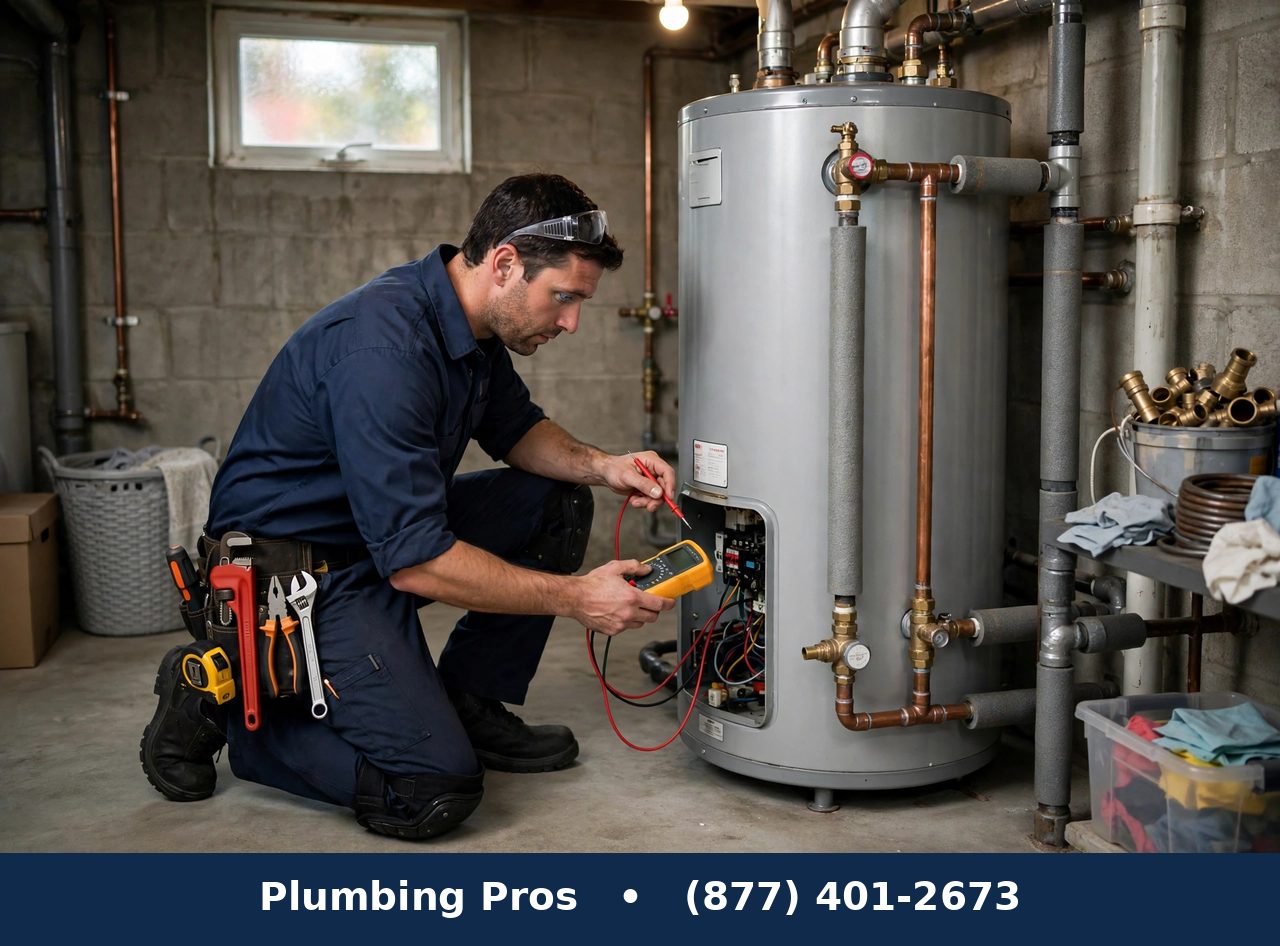
On electric units, each heating element and thermostat is tested electrically to find exactly which one quit. A tank that delivers hot water and then goes lukewarm usually has one working element and one dead one, and testing tells them apart in minutes. On gas units, the ignition chain is inspected in order: pilot orifice, thermocouple output, flame behavior, and gas control valve response. A weak thermocouple that cannot hold the gas valve open is the most common reason a pilot will not stay lit.
If the anode rod is reachable, it gets pulled and inspected. That rod sacrifices itself to corrosion so the steel tank does not have to, and its condition is the best single indicator of how much life the tank has left. A healthy rod paired with a failed element points clearly toward repair. A rod that is gone and a tank showing rust points the other way.
When the tank itself has failed, the technician says so directly and walks through what replacement involves, without pressure. Either way, you finish the visit knowing exactly what broke and why.
What affects the cost
Several real factors move a repair up or down, and none of them is the brand of the unit. Access is one: a tank in an open garage takes less time to work on than one squeezed into a low crawlspace or a tight utility closet. The part itself matters — a thermostat and a gas control valve are not the same job, even though both fit in a shopping bag.
Whether the unit is gas or electric changes both the testing and the parts involved. Condition counts too: heavy sediment slows any repair, and a unit that has been leaking may need attention to the surrounding area beyond the heater itself. The biggest factor is the repair-or-replace call, because putting a new part into a tank that is corroding through is money wasted. The technician explains these factors on site and prices the job before starting it. For an exact figure on your unit, there is no honest shortcut around the visit itself.
How we serve your area
Plumbing Pros repairs the water heaters actually installed in the area — gas and electric tanks in garages, basements, utility closets, and crawlspaces, plus tankless units mounted on interior and exterior walls. The work covers single-family homes, rental properties, and small businesses like salons and cafes that depend on steady hot water through the day.
When a tank fails beyond repair, the conversation turns to replacement options sized to the household's actual hot water use rather than the biggest box in the store. The goal is the same on every job: bring the hot water back with the smallest fix that will genuinely last.
Features
- Full diagnostic to pin down the actual fault
- Heating element and thermostat testing and replacement
- Gas ignition chain and control valve troubleshooting
- Anode rod inspection and replacement
- Sediment flushing to stop rumbling and popping
- T&P relief valve testing and replacement
- Tankless unit descaling and sensor service
Benefits
- Repair-first advice — replace only when the tank itself has failed
- A diagnosis that names the fault before any part is swapped
- Gas and electric tanks plus tankless units, all covered
- Plain-language explanation of what broke and why
- A straight answer when replacement is the smarter choice
- Preventive steps that help the unit run cleaner and longer
Frequently asked questions
Why does my water turn lukewarm halfway through a shower?
On an electric tank, that usually means one of the two heating elements has failed — the working one heats the top of the tank, then the water runs lukewarm. On a gas unit, it can point to sediment insulating the burner or a thermostat that is not demanding heat. Testing each component identifies which one quit.
Should I repair or replace my water heater?
Repair it when the tank is sound and a single component failed — an element, thermostat, thermocouple, or valve. Replace it when the tank leaks from its own body or the hot water runs rusty at multiple taps, because corroded steel cannot be repaired safely.
Why won't my gas water heater's pilot light stay lit?
Most often the thermocouple is worn out and no longer generating enough current to hold the gas valve open. A clogged pilot orifice or a failing gas control valve can cause the same symptom. Relight it once if you know how; if it goes out again, have it inspected rather than relighting repeatedly.
What causes rumbling or popping sounds from the tank?
Sediment. Minerals settle into a layer on the tank floor, trapping water underneath that flashes to steam and pops through. Flushing the tank clears early buildup; if it has hardened over a long period, the sediment may have already damaged components.
Why does my hot water smell like rotten eggs?
Bacteria in the tank can react with the magnesium anode rod and produce hydrogen sulfide, which smells like sulfur. Draining and flushing the tank, then swapping in an aluminum or zinc alloy anode rod, usually clears it.
What affects how much a water heater repair costs?
Access to the unit, gas or electric, which part failed, sediment level, and — biggest of all — whether the tank itself is still sound enough to repair. The technician lays out these factors on site and prices the job before any work begins.