Whole-Home Plumbing Winterization Near Me
Starting price: Call for pricing
Plumbing Pros prepares your entire plumbing system for winter: every supply line drained, every trap treated, and hose bibs, irrigation, and the water heater protected. One methodical visit, one written record of every valve position, and a home that can sit safely through the deepest freeze. Ideal for vacant homes, vacation properties, and any house facing a hard cold snap.
What whole-home plumbing winterization is
Whole-home plumbing winterization is a preventive service that removes standing water from every part of your plumbing system so ice cannot form inside pipes, fixtures, or appliances. A plumber shuts off the main supply, drains the lines, treats traps and toilet bowls with non-toxic antifreeze, and protects hose bibs, irrigation lines, and the water heater. The house itself stays exactly as it was — the water is simply gone from every place where freezing would do damage.
Winterization is not a repair visit and not a furnace tune-up. It does not fix leaks, replace pipe, or service heating equipment. What it does is methodical: find every spot where water sits, get it out, and document the work so spring start-up is straightforward.
When your home needs it
The clearest case is a home that will sit empty through cold weather. Think of a vacation property closing for the season, a rental between tenants, or a house on the market over winter. Without heat or daily water use, pipes cool to outdoor temperatures and freeze fast.
Occupied homes need it too. Cold air reaches supply lines in garages, crawl spaces, attics, and exterior walls long before it bothers the living room. If your pipes froze in a previous winter, the same runs are at risk again unless something changes.
Watch for these signs it is time to schedule:
- A home that will sit vacant for more than a few days in cold weather
- Hose bibs, laundry lines, or water heaters sitting in unheated spaces
- A forecast showing a hard freeze heading your way
- Past winters with frozen or burst pipes in the same house
- An irrigation or sprinkler system still charged with water in autumn
How the winterization visit works
The visit follows the water from entry to exit, in order, so nothing is missed.
It starts at the main shutoff. The valve is exercised, checked for weeping, and its location is noted so everyone in the household can find it in a hurry. A main valve that will not turn is itself a winter hazard, so testing it matters.
Next comes the drain-down. Faucets open, toilets flush, and the water heater drains while the plumber works from the highest fixture to the lowest. Compressed air clears low spots and long runs where gravity alone leaves water behind. Each drain trap and toilet bowl then gets non-toxic antifreeze, which protects the curved sections that can never fully drain.
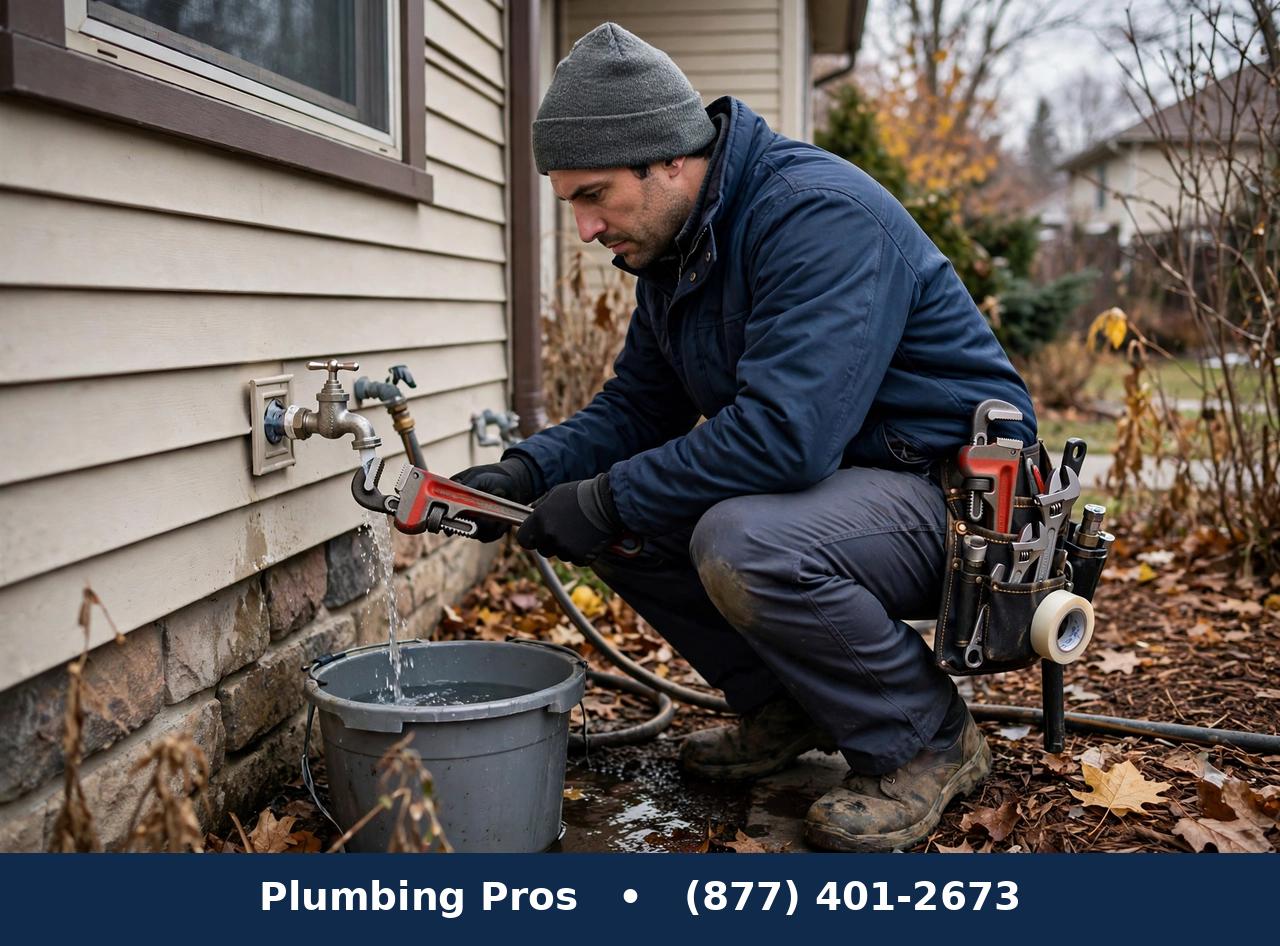
Outdoor plumbing gets its own pass. Hoses disconnect from every hose bib, bibs shut off from inside where the plumbing allows, and irrigation or sprinkler zones blow out so lateral lines do not split underground. The water heater is set for the cold stretch ahead, with its drain pan and connections checked.
The visit ends with paperwork that pays off all winter: a written record of every valve position, each protected fixture, and what to do at spring start-up. Tags mark fixtures that should stay off until the system is brought back into service.
What affects the cost
No two winterizations cost the same, because no two homes hold water in the same places. The honest answer is that several plain factors set the price, and Plumbing Pros quotes every job against them.
Size and fixture count lead the list. A small ranch with one bathroom drains far faster than a two-story home with three baths, a laundry room, and a wet bar. More fixtures mean more traps, more valves, and more time at each one.
Access matters next. A main shutoff buried behind stored boxes, a crawl space that takes a ladder to enter, or a water heater tucked into a tight closet all add labor. Homes where everything is reachable move quickly.
The equipment on the property changes the work too. An irrigation system with several zones, a second water heater, a water softener, or a sump pump each add steps. So does anything the visit uncovers — a shutoff that will not close or a hose bib that leaks when tested may need repair before the system can be safely drained.
Timing plays a role as well. Scheduling in early autumn, before the first freeze warning sends everyone calling at once, keeps the visit on your calendar instead of squeezed between emergencies.
How Plumbing Pros serves your area
Plumbing Pros winterizes single-family homes, duplexes, vacation cabins, and rental properties. The service fits any building whose plumbing will face cold weather with little or no heat running. The service fits empty houses best, but occupied homes with exposed runs get the same full treatment.
Every visit ends with the written valve record and a start-up checklist for spring, so the return to service is as orderly as the shutdown. Request the service before the first hard freeze and the whole job happens on your schedule, not winter's.
Features
- Full-system drain-down of every supply line and fixture
- Compressed-air clearing of low spots and long runs
- Non-toxic antifreeze treatment for traps and toilet bowls
- Hose bib and outdoor faucet shutdown and protection
- Irrigation and sprinkler line blowout
- Water heater prep and drain-pan check
- Written valve-position record for spring start-up
Benefits
- Frozen and burst pipes stopped before winter ever arrives
- A vacant home that sits safely through the coldest months
- One visit that covers the entire plumbing system end to end
- Clear written records that make spring restart simple
- Vulnerable runs found before they turn into emergencies
- Water heater and outdoor lines protected from freeze damage
Frequently asked questions
What exactly does plumbing winterization include?
A plumber shuts off your main water supply, drains every supply line and fixture, clears low spots with compressed air, and adds non-toxic antifreeze to traps and toilet bowls. Hose bibs, irrigation lines, and the water heater are protected as well, and you receive a written record of every valve position for spring start-up.
How much does it cost to winterize a house?
It depends on the size of your home, the number of fixtures, and how easy the shutoffs and crawl spaces are to reach. Extras like irrigation zones or a second water heater add to the work as well. Plumbing Pros quotes each job against those factors so you know what the work covers before it begins.
Can I winterize my own plumbing?
You can handle the basics yourself, like disconnecting hoses and insulating exposed pipe. But a full drain-down means testing the main shutoff, blowing out low spots, and treating every trap — and one missed run can still freeze and split. A professional visit covers the whole system in a single pass.
When should I schedule winterization?
Early autumn, before the first hard freeze warning. Waiting until a freeze is forecast means competing with everyone else for an appointment, and pipes can freeze the very first night temperatures drop hard.
Do I still need winterization if I live in the house all winter?
If the heat stays on and water flows daily, a full drain-down is usually unnecessary. But pipes in unheated garages, crawl spaces, and exterior walls can still freeze during a severe cold snap. Targeted protection like insulation, bib covers, and sealing air gaps is worth doing.
How is the system restarted in spring?
The process runs in reverse: drain valves close, the main supply reopens slowly, antifreeze flushes from traps and lines, and every fixture is checked for leaks. The valve record made during winterization keeps the restart orderly instead of guesswork.